Tiny White Bugs: What They Are and What They Mean
Tiny white bugs in the house are most often booklice or mites on damp paper and old food, springtails in wet spots, or mealybugs and whiteflies on houseplants. A pale roach or bed bug is usually young or just molted. Most white bugs mean too much moisture or a forgotten food package, and drying out or cleaning out fixes them.
Difficulty: easy. Call a pro if you find creamy white, ant-like insects in wood or mud tubes on the foundation (possible termite workers), or pale, flat insects with dark spotting in mattress seams (possible bed bug nymphs). Renters should tell the landlord in writing first.
This page sorts tiny white bugs by where you found them, covers the few that matter (termites, bed bugs, roaches) and says what to do about each. It rests on university extension fact sheets (Maryland, Purdue, Kentucky, Washington State, UC IPM, Mississippi State) and EPA. For other colors, see common house bugs.
In this guide:
- Tiny White Bugs: Sort Them by Where They Are
- Tiny White Bugs on Books, Boxes and Windowsills
- Tiny White Bugs in Flour, Cereal and the Pantry
- Tiny White Bugs in the Bathroom
- Tiny White Bugs on Plants
- Small White Bugs in Bed
- Do Tiny White Bugs Bite?
- How to Get Rid of Tiny White Bugs
- Common Questions
Tiny White Bugs: Sort Them by Where They Are
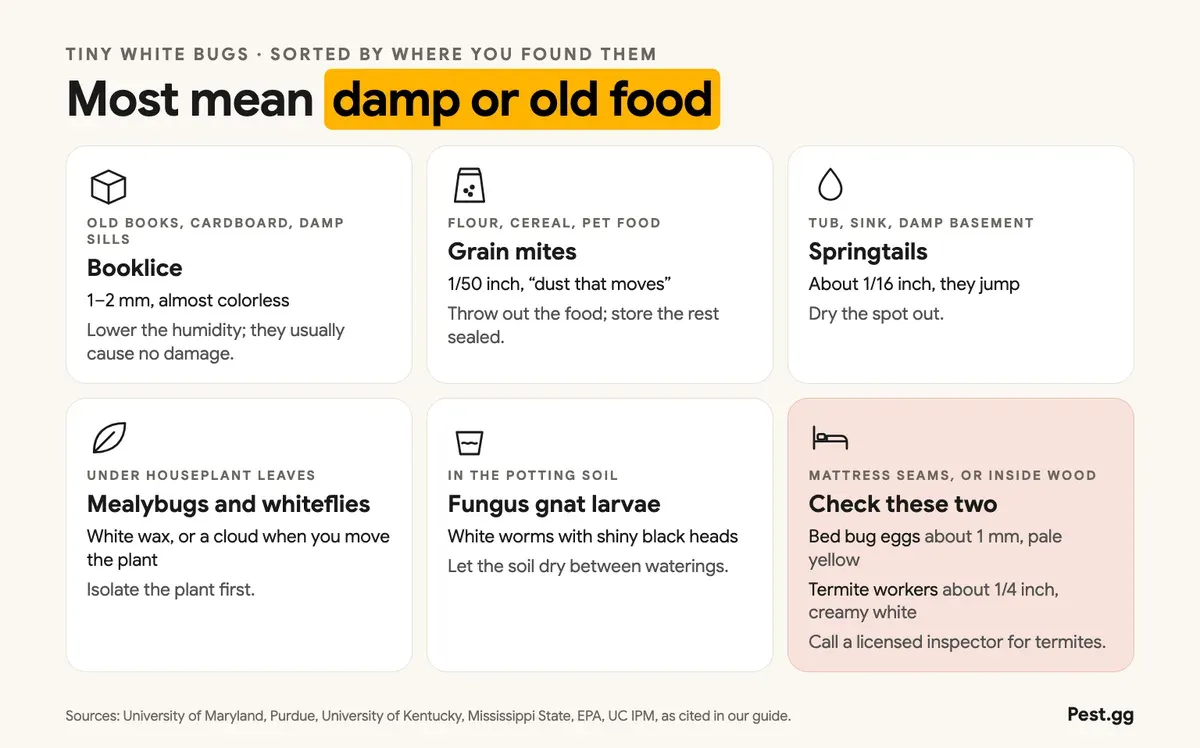
| Where you found them | Most likely |
|---|---|
| Old books, cardboard, damp windowsills | Booklice |
| Flour, cereal, baking mix, pet food | Grain mites, or pantry pest larvae |
| Tub, sink, damp basement, plant saucer | Springtails |
| Under houseplant leaves, white fluff | Mealybugs |
| Fly up in a cloud when you touch the plant | Whiteflies |
| In the potting soil, tiny worms | Fungus gnat larvae |
| Mattress seams, with dark spots | Bed bug nymphs or eggs |
| A pale roach in the kitchen or bathroom | A cockroach that just shed its skin |
| Inside wood, or near mud tubes | Termite workers: call a licensed inspector |
Many are 1/50 to 1/16 inch: some are barely visible, and many people first notice them in a group or as “dust” that moves. A magnifier or your phone’s zoom helps.
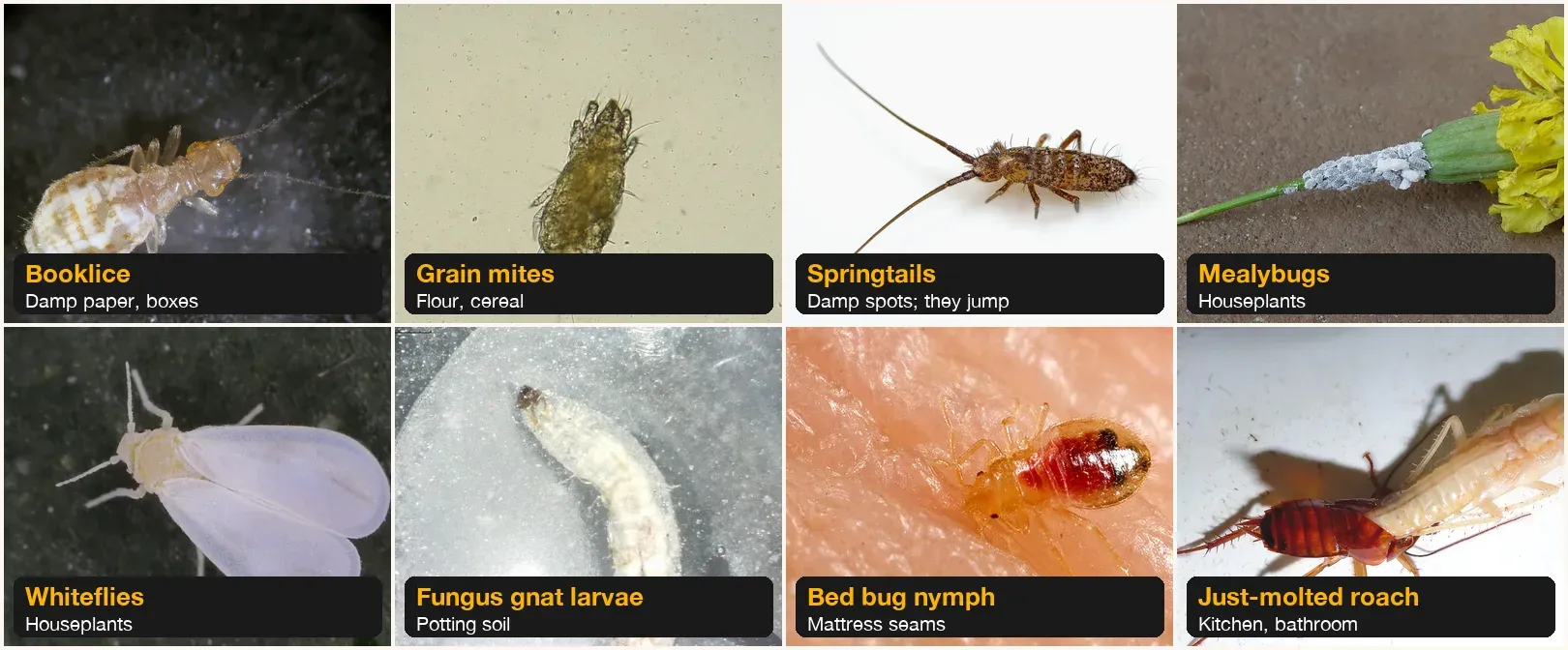
Real photos, not to scale. Photo credits are with each bug’s photo below.
Tiny White Bugs on Books, Boxes and Windowsills
Booklice
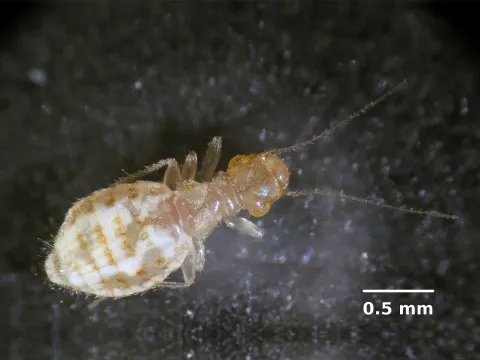
Booklice are the classic answer. University of Maryland Extension describes them as 1 to 2 mm long, almost colorless, gray or light brown, and most common indoors in spring and summer. They eat mold spores on damp paper, cardboard and stored food, and usually cause no damage.
They’re a humidity alarm, not a pest problem. Maryland’s advice is simply to reduce moisture and humidity: open up stored boxes, move books off outside walls, run a fan or dehumidifier. Our guide to using a dehumidifier for bugs covers the target humidity and what it costs. Throw out cardboard and paper that smells moldy.
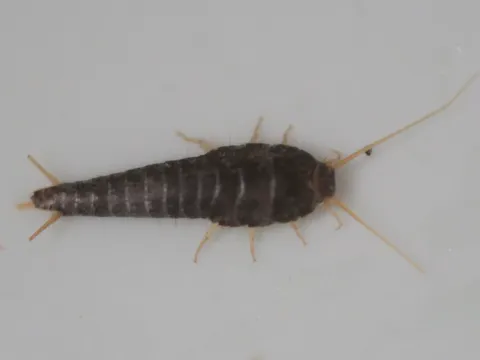
Not to be confused with silverfish: those are bigger, about 1/2 to 3/4 inch not counting the tails, silvery gray and shaped like a carrot. See are silverfish harmful.
Tiny White Bugs in Flour, Cereal and the Pantry
Grain mites
If a bag of flour or cereal seems to have “dust that moves,” it’s likely grain mites. Purdue describes them as microscopic (1/50 inch), pale grayish white, smooth and soft-bodied. Kentucky says the first sign is often a fine dust-like layer of mites on a shelf, bag or counter, and Washington State notes infested surfaces can appear to move.
They thrive in damp food and feed on flour, cereals, mixes, dried fruit, pet food, cheese and mold (Kentucky, Washington State). Kentucky’s fix:
- Find and throw out every infested package.
- Vacuum shelves and cracks with the crevice tool and wipe them down.
- Store the rest in tightly sealed containers, and ventilate to bring humidity down.
Both Kentucky and Washington State advise against insecticides in the kitchen or pantry.
White worms in dry food
Small white “worms” in flour, nuts or cereal are larvae, not mites. UC IPM describes Indian meal moth larvae as about 1/2 inch, white with a greenish or pinkish tint, and flour beetle larvae as about 3/16 inch, white tinged with yellow. Webbing in the food points to the moth: see how to get rid of pantry moths. No webbing, with small reddish beetles nearby, points to flour beetles. White worms somewhere else, like the trash, a drain or plant soil? See small white worms in the house.
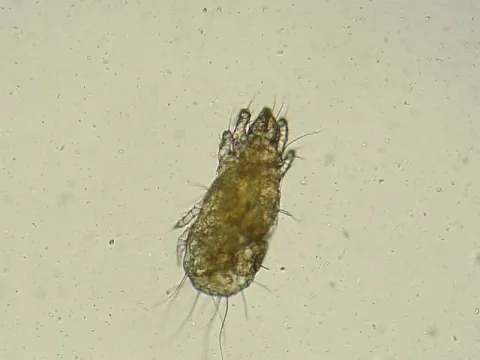 Grain miteAbout 1/50 inch; looks like moving dust.
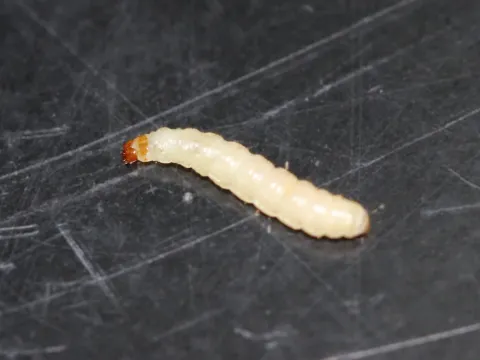 Pantry moth larvaUp to 1/2 inch; webbing in food.
Tiny White Bugs in the Bathroom
Pale bugs around a tub, sink or damp basement wall are usually one of three:
- Springtails: about 1/16 inch, gray, white, black or bluish, and they jump (UC IPM). See how to get rid of springtails.
- Booklice: about the same size, but they run in jerky bursts and never jump.
- Silverfish: much bigger, fast, with three tails.
All three are moisture pests. A fan, fixing the drip and drying the area after showers matter more than any product.
A white cockroach
A white roach isn’t a separate kind or an albino. Young cockroaches shed their skin as they grow, and Kansas State says they look white for several hours until the new skin darkens and hardens. It’s still a cockroach, the one bug on this page worth acting on fast; see baby cockroach for how to tell the young of each species apart.
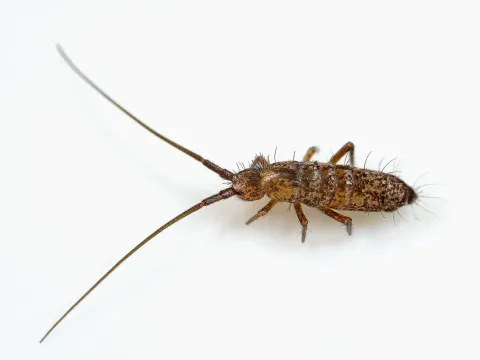 HarmlessSpringtailAbout 1/16 inch; jumps.
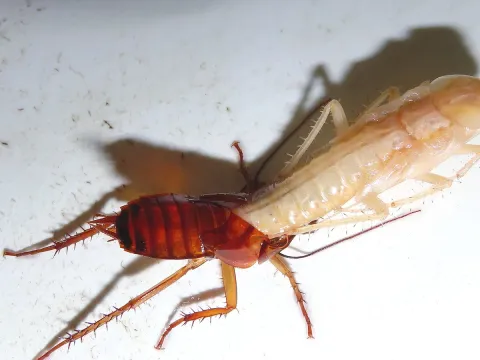 Act fastJust-molted cockroachWhite for a few hours, then darkens.
Tiny White Bugs on Plants
Plant pests are the most common “tiny white bugs” outside the kitchen. Mississippi State’s houseplant guide (P2652) describes three.
Mealybugs
Oval, wingless and covered in white powdery wax, clustered on the undersides of leaves and new growth. They leave sticky honeydew. Mississippi State calls them one of the harder houseplant pests to control.
Whiteflies
Tiny insects with white, powdery wings held tent-like over the body. They rise in a cloud when you move the plant, and the flat, oval nymphs sit still under the leaves. Mississippi State notes they must be controlled at the immature stage under the leaves.
Fungus gnat larvae
Slender, white worms with shiny black heads, living in the potting soil. The adults are the small dark flies around the pot; see how to get rid of fungus gnats.
Isolate an infested plant first so the pests don’t spread, and expect several rounds of treatment.
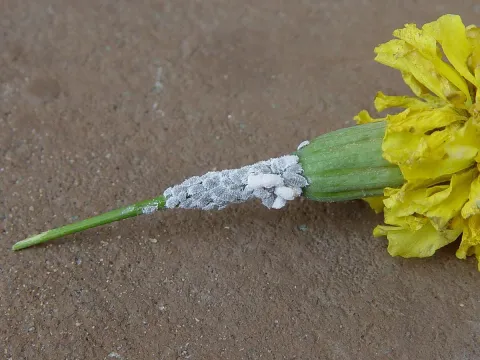 MealybugsWhite wax; leaves and stems.
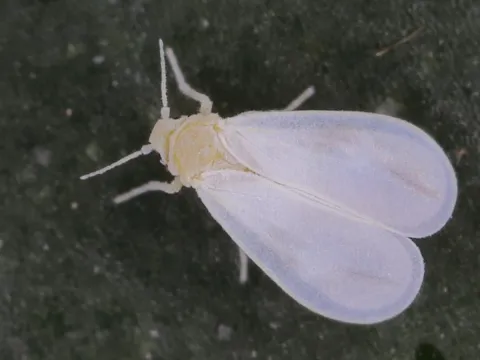 WhiteflyFlies up in a cloud.
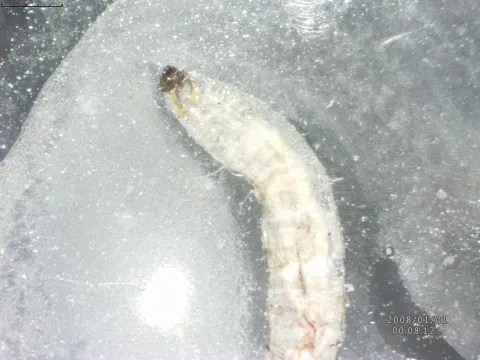 Fungus gnat larvaClear body, shiny black head.
Small White Bugs in Bed
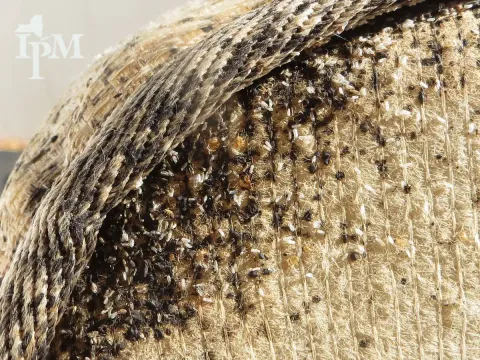
Most pale specks on bedding are lint or skin flakes, but check the mattress seams for two signs of bed bugs.
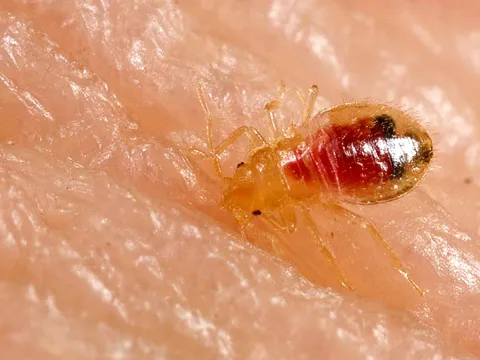
Bed bug eggs and nymphs
- Eggs: about 1 mm, pale yellow (EPA), glued in seams and cracks.
- Nymphs: smaller than adults and pale, nearly see-through until they feed, then reddish.
EPA lists the other signs to look for: dark spots that bleed into fabric like a marker, rusty stains, and shed skins. Photos of each stage are in what do bed bugs look like; to rule out the common look-alike before you pay for treatment, see carpet beetle vs bed bug.
Do Tiny White Bugs Bite?
Almost none of them do. Booklice, springtails, grain mites, mealybugs and whiteflies don’t feed on people. Two caveats from the sources:
- Grain mites: Washington State says prolonged contact can cause a skin irritation called grocer’s itch.
- Bed bug nymphs do bite: EPA says each stage needs a blood meal before it can molt to the next.
If you have bites and can’t find a bug, try our free bug bite identifier: it asks about the bites and where you were, and says which pests fit and when to see a doctor.
How to Get Rid of Tiny White Bugs
Most tiny white bugs leave once you remove what they live on:
Step 1: Identify them. Lift one with clear tape onto white paper and photograph it. Our free bug identifier can match the photo against the house pests in the Pest Library.
Step 2: Remove the food source. Throw out infested food, moldy cardboard and paper.
Step 3: Dry the area. Fix leaks, ventilate, and bring indoor humidity down. Booklice and mites need damp conditions (Maryland, Washington State).
Step 4: Store food sealed. Use containers with tight-fitting lids, not bags (UC IPM).
Step 5: Treat plants separately. Isolate the plant and work on the undersides of the leaves (Mississippi State).
Skip the bug spray indoors: none of the extension sources above recommends insecticides for booklice, grain mites or springtails.
Common questions
Termite workers are creamy white and about 1/4 inch long (University of Kentucky), but you rarely see them in the open; they stay inside wood, soil and mud tubes. See what do termites look like for photos. Small white bugs crawling on a sill or in a box are far more likely booklice or mites.
Moving “dust” on a pantry shelf or bag of flour is usually grain mites, which Kentucky says often show up first as a fine dust-like layer. On damp walls or furniture, see mold mites. Throw out the infested food and store the rest sealed.
Indoors, it’s most often an adult carpet beetle. The University of Kentucky describes adults as small (1/16 to 1/8 inch), oval beetles ranging from black to mottled patterns of white, brown, yellow and orange, often on windowsills in spring. The larvae under rugs and in closets are the ones that eat fabric; see carpet beetles.
Condensation keeps windowsills damp, which suits booklice and springtails. Dry the sill, improve airflow and they fade on their own.
Sources and further reading · 9
- University of Maryland Extension: Booklice.
- Purdue Extension: Grain Mite (E-222), November 2018.
- University of Kentucky Entomology: Carpet Beetles (EF601), Grain Mites (EF629) and Termite Control: Answers for Homeowners (EF604).
- Washington State University PestSense: Mites in Stored Foods.
- UC IPM: Pantry Pests and Springtails.
- Mississippi State University Extension: Insect Pests of Houseplants (P2652).
- EPA: How to Find Bed Bugs.
- Kansas State University Research and Extension: Cockroaches (MF2765): molting nymphs look white for several hours.
- University of Nebraska–Lincoln (hosted by Utah State): IPM for Silverfish, Firebrats, and Booklice.