What Do Termites Look Like? Workers, Soldiers & Swarmers
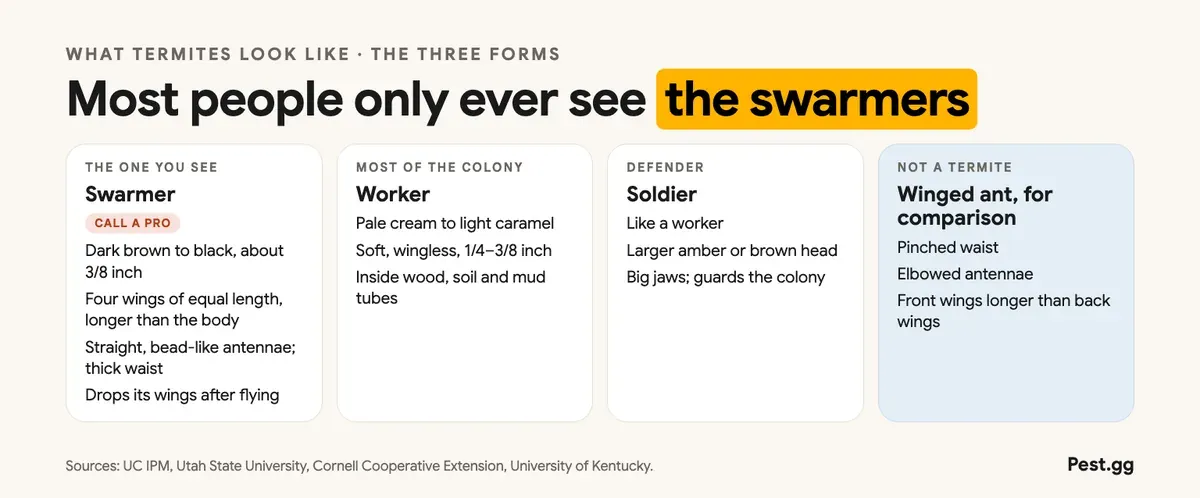
Infographic: a swarmer, a worker and a soldier, with a winged ant for comparison. Sources: UC IPM, Utah State University, Cornell Cooperative Extension, University of Kentucky.
A termite looks like a soft, pale ant with no waist, about 1/4 to 3/8 inch long. The exception is the swarmer: dark brown to black, with four equal wings much longer than its body.
Difficulty: easy. Call a pro if you see winged termites or piles of shed wings indoors, mud tubes on the foundation, or pale, soft insects inside damaged wood. Termite treatment is a job for a licensed professional.
The three forms you might see:
- Workers: cream-colored, soft and wingless, 1/4 to 3/8 inch.
- Soldiers: like workers, with a large, darker head and big jaws.
- Swarmers: dark brown to black, about 3/8 inch, with four equal wings much longer than the body.
(Sizes and colors from Utah State University and UC IPM.)
Workers and soldiers stay hidden in wood, soil and mud tubes, so most people find swarmers, shed wings, mud tubes or termite droppings first. Real photos of each:
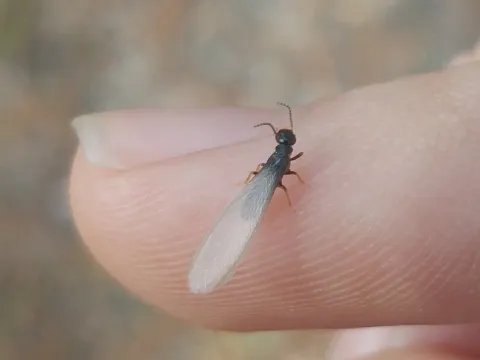 Call a proSwarmerDark body; four long, equal wings.
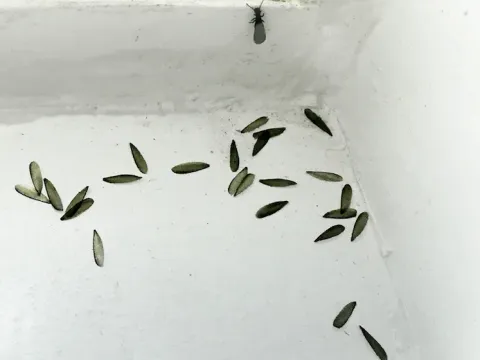 Call a proShed wingsPiles on sills after a swarm.
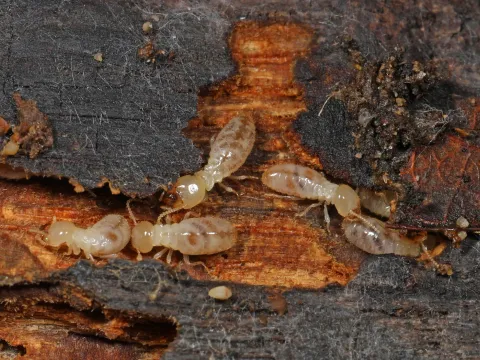 WorkersPale and soft; inside wood or tubes.
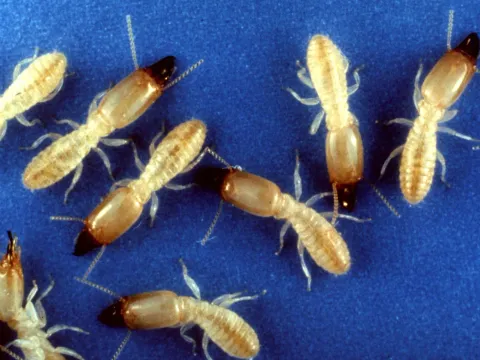 SoldiersLong amber head, dark jaws.
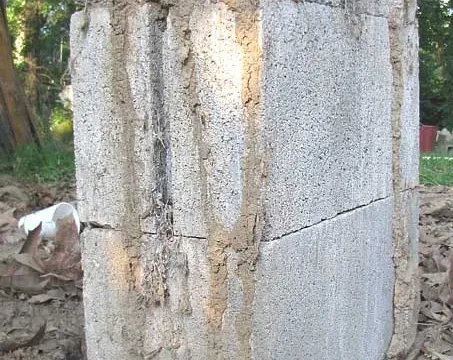 Mud tubesPencil-wide, on foundations.
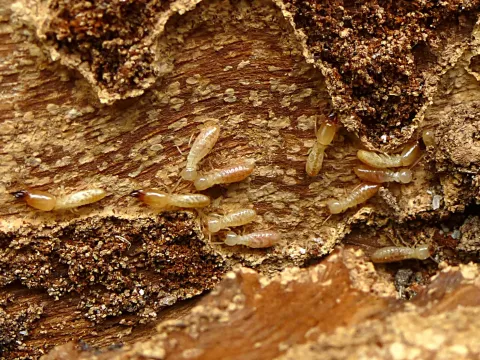 Drywood termitesLive inside dry wood; leave pellets.
In this guide:
- Termites With Wings: Swarmers
- Termite Workers and Soldiers
- Termite or Ant? Three Quick Checks
- Signs You Have Termites
- What to Do If You See Termites
Termites With Wings: Swarmers
Winged termites are the young kings and queens leaving the colony to start new ones. They come out in large numbers, often called a swarm.
What they look like:
- Body: dark brown to black (Cornell Cooperative Extension, UC IPM). About 3/8 inch for subterranean termites (Utah State).
- Wings: four gray or see-through wings, all the same size, much longer than the body (Cornell Cooperative Extension).
- Shed wings: after a short flight, swarmers drop their wings. Piles of wings on windowsills and floors are a common sign (University of Florida).
When you might see them:
- Subterranean termites usually swarm in spring. UC IPM says Reticulitermes swarm in the afternoon on clear days after a soaking rain, in spring or fall. Cornell Cooperative Extension gives March through June for the eastern subterranean termite.
- Formosan subterranean termites swarm at dusk and are attracted to lights (UC IPM).
- Drywood termites swarm during the day in summer and fall in California (UC IPM).
Swarmers that come out indoors can’t damage wood and only live about a day, says the University of Kentucky. But they almost always mean the house is infested.
Termite Workers and Soldiers
These are the termites inside the wood. You’ll usually only see them if you break open a mud tube or damaged wood.
- Workers are the most numerous. They’re wingless, soft-bodied and light caramel to pale cream (UC IPM, Utah State). They do the eating and building.
- Soldiers look like workers but have larger amber or brown heads and larger jaws (UC IPM). Subterranean soldiers have long, narrow heads with no eyes (UC IPM). They guard the colony.
Pale, soft insects in damaged wood or a mud tube are very likely termites. Unlike ants, they have no pinched waist.
Termite or Ant? Three Quick Checks
Winged ants swarm at the same time of year, so they’re easy to confuse (University of Kentucky). Check three things:
| Check | Termite | Ant |
|---|---|---|
| Waist | Thick, no pinch | Narrow and pinched |
| Antennae | Straight, like a string of beads | Bent at an elbow |
| Wings | All four the same size, longer than the body | Front pair longer than the back pair |
Sources: University of Kentucky, Cornell Cooperative Extension, Utah State.
The ants most often mistaken for termites are carpenter ants; photos and the damage each leaves are in carpenter ants vs. termites. Still not sure? Try our free bug identifier: upload a photo and see what it most likely is.
Signs You Have Termites
You may never see a live termite. The University of Kentucky lists these signs:
- Mud tubes about the width of a pencil on foundations, piers, sills or joists.
- Winged termites or shed wings on windowsills and along floor edges.
- Damaged wood hollowed out along the grain, lined with bits of mud or soil.
Drywood termites leave a different sign: tiny, hard, six-sided pellets piled under the wood (UC IPM). See termite droppings for photos. For other holes and debris in wood, see holes in wood.
What to Do If You See Termites
- Don’t spray them. Vacuum indoor swarmers if you like. Save a few in a bag or on tape for the inspector.
- Leave mud tubes in place so an inspector can check them.
- Get inspections from two or three licensed companies. The University of Kentucky says termite treatment is a job for professionals, and to take your time choosing: termites damage wood slowly. UC IPM says do-it-yourself termite products are generally not effective.
- Fix what draws them. Keep wood off the soil and water away from the foundation (University of Kentucky).
A swarm from a stump or woodpile in the yard doesn’t automatically mean your house is infested. A swarm next to the foundation, or indoors, likely does (University of Kentucky).
What you can do yourself, and what each professional treatment involves, is in how to get rid of termites.
Common questions
Termite colonies include immature termites as well as workers (UC IPM). In drywood termite colonies, immature “false workers” do most of the work (University of Florida). So young termites look much like workers: pale, soft and wingless.
It depends on the type. Workers are pale cream or light caramel. Soldiers have a darker amber or brown head. Swarmers are dark brown to black (UC IPM, Cornell Cooperative Extension). Some species have lighter swarmers: UC IPM says the desert subterranean termite in southern California has light-brown winged forms.
Indoor swarmers can’t damage wood and live only about a day (University of Kentucky). The danger is to the house: swarmers indoors almost always mean an infestation.
Subterranean swarmers are about 3/8 inch and workers 1/4 to 3/8 inch (Utah State). Dampwood swarmers are bigger, about 1/2 inch (University of Florida).
Sources and further reading · 6
- UC IPM: Subterranean and Other Termites: castes, colors, soldier heads, swarming times, DIY products not effective.
- UC IPM: Drywood Termites: drywood swarming times, pellets.
- Utah State University: Western Subterranean Termite: swarmer and worker sizes, termites vs. ants.
- Cornell Cooperative Extension, Nassau County: Eastern Subterranean Termites: swarmer color, wings, swarm season, ants vs. termites.
- University of Kentucky: Termite Control, Answers for Homeowners (EF604): swarmers indoors, ants vs. termites, signs, hire a pro.
- University of Florida: Drywood and Dampwood Termites (ENY-211, archival copy): shed wings, dampwood swarmer size.