Bed Bug Eggs: What They Look Like and Where to Find Them
Bed bug eggs are tiny, about 1 mm long, the size of a pinhead, and pearl white (EPA). They’re coated in a glue-like material, so they stick where they’re laid (UC IPM). You’ll usually find them in small groups along mattress seams, in the box spring and in cracks of the bed frame.
Difficulty: easy. Call a pro if you find live bed bugs, eggs or shed skins, or an extension office confirms a sample. Bed bugs usually take a licensed professional and several visits; if you rent, tell your landlord in writing first.
They’re hard to see. UC IPM says you need a hand magnifier to see bed bug eggs. Below: real photos of eggs before and after hatching, where to look, how to tell them from lint and flea eggs, and what actually kills them.
In this guide:
- What Bed Bug Eggs Look Like
- Where to Find Bed Bug Eggs
- Bed Bug Eggs vs. Look-Alikes
- How Fast Bed Bug Eggs Hatch
- What Kills Bed Bug Eggs
What Bed Bug Eggs Look Like
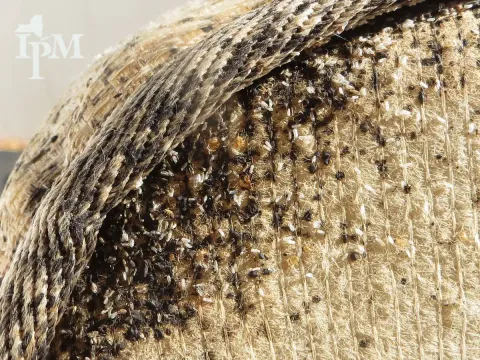 Call a proEggs on a mattress seamWhite specks among black stains.
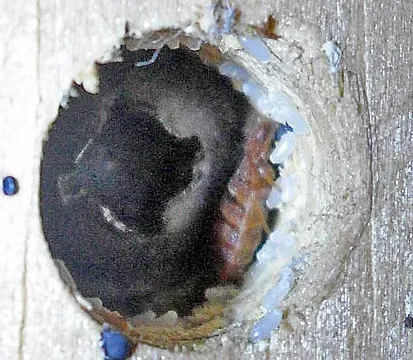 Eggs in a screw holeGlued in a crack of a wooden bed.
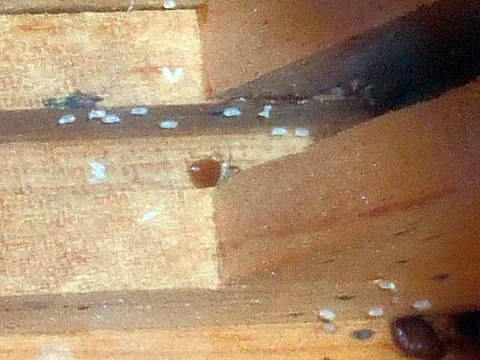 Eggs next to adultsAn egg is about 1 mm; an adult 5–7 mm.
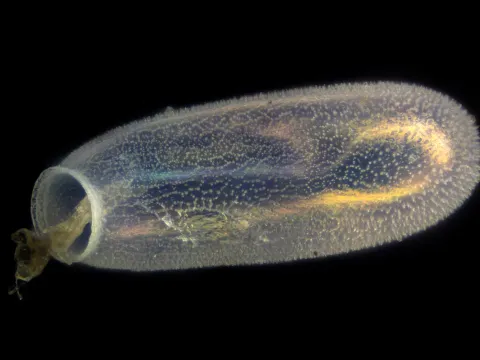 Hatched eggshellEmpty, clear, open at one end.
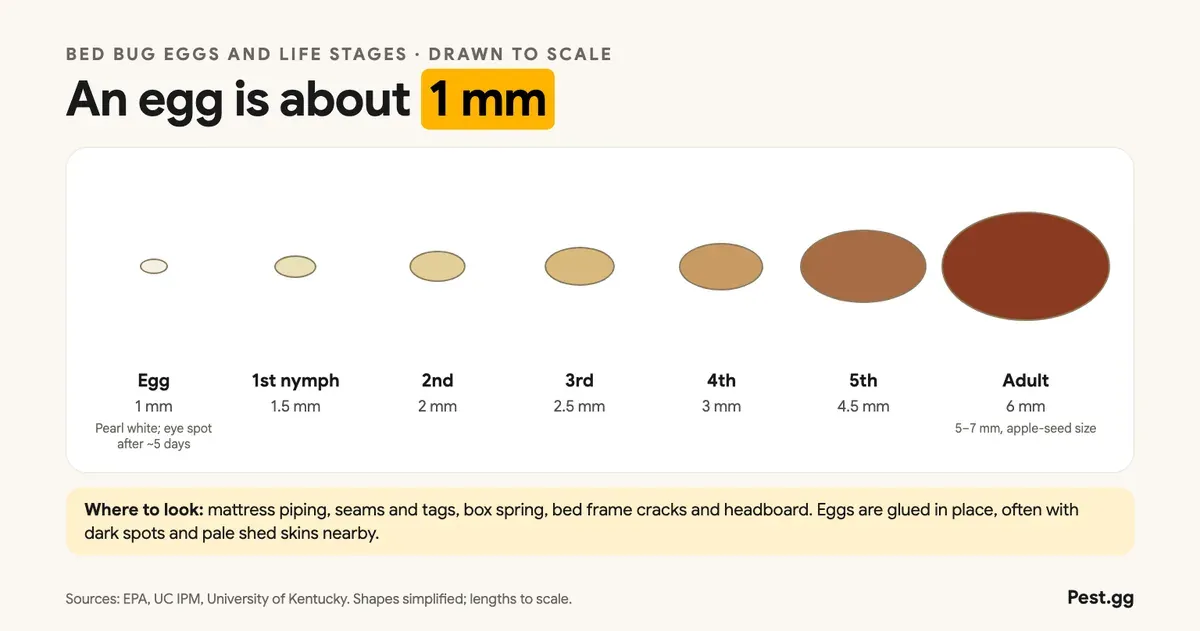
Infographic: a bed bug egg next to each life stage, to scale. Sources: EPA, UC IPM, University of Kentucky.
- Size: about 1 mm, or 1/20 inch (EPA, UC IPM). The University of Kentucky compares them to a speck of dust.
- Color: pearl white (EPA), whitish (University of Kentucky).
- Sticky: coated in a glue-like material, so they stay put (UC IPM). Empty eggshells often stay stuck after hatching too.
- Eye spot: an egg more than five days old has a dark eye spot (EPA). UC IPM shows these as red dots on the developing embryo.
- Found with: dark spots of bed bug droppings and tan or pale shed skins (University of Kentucky, EPA).
Before and after hatching: a fresh egg is pearl white; after about five days it shows a dark eye spot (EPA). Once the nymph is out, the empty shell stays glued in place, so you’ll often find hatched and unhatched eggs together (University of Kentucky). Hatched eggs alone still mean bed bugs bred there.
A female lays 1 to 3 eggs a day and 200 to 500 in her lifetime (EPA).
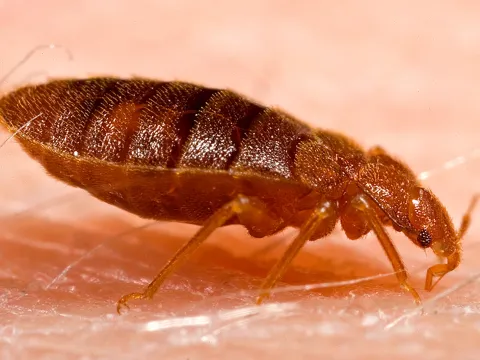 Call a proAdult bed bug5–7 mm; flat, apple-seed shape.
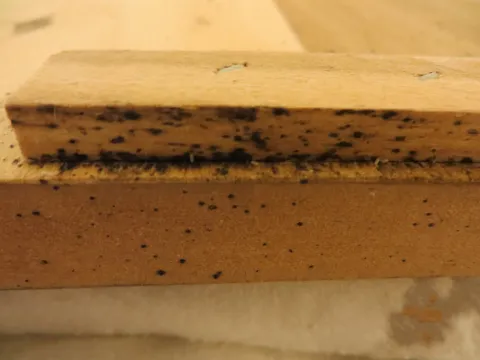 Droppings on a bed frameInk-like dots; check nearby for eggs.
Where to Find Bed Bug Eggs
Bed bugs lay eggs in secluded places near where people sleep or rest (University of Kentucky, UC IPM). UC IPM says they prefer rough surfaces such as wood or paper.
Check, with a bright flashlight and a magnifier:
- Mattress and box spring: the piping, seams and tags (EPA).
- Bed frame and headboard: cracks and joints (EPA).
- Near the bed: couch and chair seams, between cushions, curtain folds, outlets and along carpet edges (EPA, University of Kentucky).
EPA says a crack that holds a credit card could hide a bed bug.
If you find something, save it on clear tape or in a small sealed bag. EPA says your state cooperative extension office may be able to help identify it.
Bed Bug Eggs vs. Look-Alikes
| Looks like a bed bug egg | How to tell |
|---|---|
| Lint or seeds | Can look remarkably like insects to the naked eye (Connecticut Agricultural Experiment Station). Use a magnifier: eggs are smooth ovals, all about 1 mm (EPA). |
| Flea eggs | Also tiny and white, but smooth and loose; they fall off pets into carpet and pet beds (UC IPM). Bed bug eggs are glued in place in seams and cracks. |
| Shed skins | Pale tan and shaped like a bug, not an oval egg (EPA, University of Kentucky). |
More on flea eggs: what do fleas look like.
Not sure it’s bed bugs at all? Carpet beetles are the most common mix-up: see carpet beetle vs. bed bug and bugs that look like bed bugs. Found the bug itself? Identify it from a photo with our free bug identifier.
How Fast Bed Bug Eggs Hatch
- About a week at room temperature (University of Kentucky). UC IPM gives 10 to 15 days.
- New nymphs are about 1.5 mm, straw-colored to whitish yellow, and can be almost invisible before they feed (EPA, University of Kentucky).
- Egg to egg takes four to five weeks in good conditions (EPA). UC IPM gives five weeks to four months for egg to adult, depending on temperature and food.
So eggs mean bed bugs are breeding where you found them, not just passing through.
What Kills Bed Bug Eggs
Eggs are harder to kill than bugs. The University of Kentucky says eggs are especially hard to dislodge when vacuuming. These methods work on eggs:
- The dryer. Put bedding, clothes, shoes and backpacks in a dryer on medium-to-high heat for 10 to 20 minutes (University of Kentucky). UC IPM says at least 10 to 15 minutes on the hottest setting. Wash in hot water (120°F) first if needed (UC IPM).
- Steam. UC IPM says portable steamers can kill all bed bug life stages on mattresses and furniture.
- Targeted vacuuming. Scrape the end of the vacuum wand slowly along seams and edges (University of Kentucky). Repeat it: one pass rarely gets everything (UC IPM).
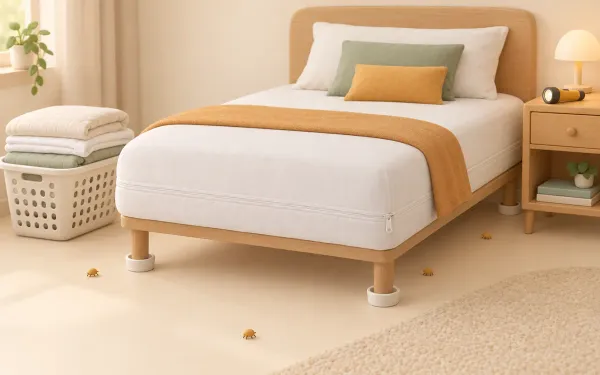
- Encasements. A bed bug encasement on the mattress and box spring traps any eggs and bugs inside so they eventually die (UC IPM, University of Kentucky).
- Whole-room heat by a licensed company. UC IPM gives at least 140°F for two hours or 130°F for three hours.
If you rent, tell your landlord in writing. The full plan, step by step, is in how to get rid of bed bugs; costs are on the bed bug page in the Pest Library.
Common questions
Barely. They’re about 1 mm (EPA), and UC IPM says seeing them needs a hand magnifier. The University of Kentucky says they’re especially hard to see on light-colored materials.
No. Heat kills them. The University of Kentucky says 10 to 20 minutes on medium-to-high heat in a dryer reaches lethal temperatures.
Pearl white when fresh (EPA). Older eggs show a dark eye spot (EPA). The pale yellow “skins” people find nearby are usually shed skins from nymphs (EPA).
Bedding and clothing near an infestation can carry bugs and eggs. UC IPM and the University of Kentucky say to wash them hot and dry them on high heat.
Sources and further reading · 6
- EPA: Bed Bugs, Appearance and Life Cycle: egg size and color, eye spot, nymph and adult sizes.
- EPA: How to Find Bed Bugs: eggs and eggshells, where to look, eggs per day and lifetime, egg-to-egg time.
- UC IPM: Bed Bugs: 1/20 inch white eggs, glue, rough surfaces, hatching in 10 to 15 days, magnifier, laundering, dryer, steam, encasements, heat.
- University of Kentucky: Bed Bugs (EF636): eggs like dust specks, hatched and unhatched eggs together, sticky, hatch in about a week, vacuuming, dryer, encasements.
- UC IPM: Fleas: flea eggs are smooth and fall off.
- Connecticut Agricultural Experiment Station: Bed Bugs and Look-Alikes (PDF): lint and seeds look like insects.