How to Prevent Bed Bugs at Home and When You Travel
You prevent bed bugs by not giving them a ride in. They come in on luggage, clothes, bedding, furniture and other belongings (UC IPM), so most prevention happens at the door: after trips, before used furniture comes home and in shared laundry rooms. Sprays don’t help here. NPIC says not to use pesticides as a preventive treatment, because modern products usually have to hit the bugs to work.
Difficulty: easy. Call a pro if you find live bed bugs, eggs, shed skins or dark spots. Bed bugs usually take a licensed professional and several visits; if you rent, tell your landlord in writing first.
Below are the habits that lower the risk, sorted by where bed bugs usually come from, plus how to catch an infestation while it’s still small.
Know What You’re Looking For
NPIC’s first prevention step is learning what bed bugs, their eggs, shed skins and dark droppings look like. Real photos of each:
- What do bed bugs look like: adults, nymphs and eggs
- Signs of bed bugs: dark spots, stains and shed skins, and where to check
- Bed bug eggs: close-ups, and how to tell them from lint
After a Trip
NPIC calls coming home from a trip your best chance to keep bed bugs out:
- Check your luggage before it comes inside, and don’t store it near beds, couches or other places people rest (NPIC).
- Dry your clothes on a hot setting for 30 minutes before putting them away (NPIC).
At the hotel, check the bed before you unpack and keep your bags off the bed and the floor; how to check for bed bugs in a hotel room walks through it.
Used Furniture and Clothes
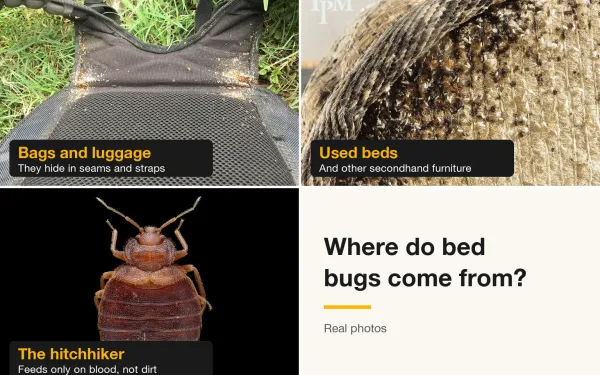
UC IPM calls secondhand mattresses and furniture known high-risk sources of bed bugs.
- Inspect and clean used furniture before bringing it home (NPIC). Check the seams, cracks and joints for signs of bed bugs (EPA).
- Dry used clothing on high for at least 30 minutes before it comes home (NPIC).
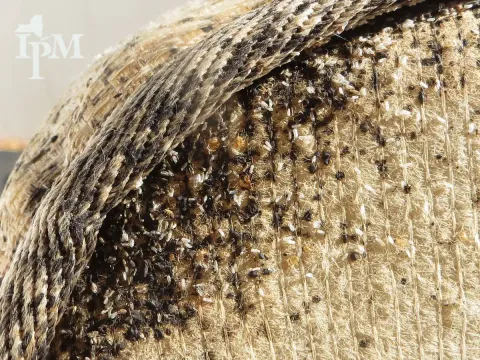 Mattress seamCheck here on any used bed.
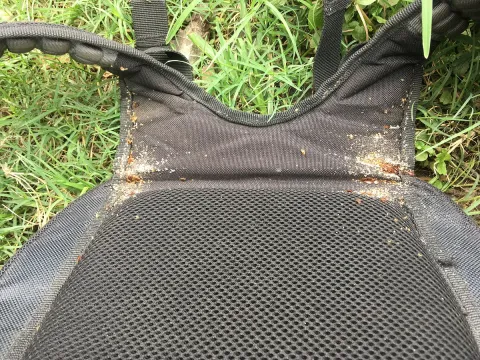 Bag strapsSeams and folds hide them.
In Your Bedroom
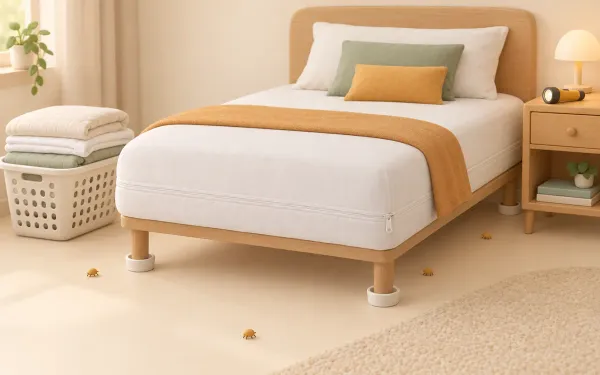
- Encase the mattress and box spring. UC IPM says specially designed encasements help prevent infestations. The EPA adds that their light color makes bed bugs easier to see; buy a sturdy one and check it often for holes. The University of Kentucky notes encasements don’t stop bugs from climbing onto the bed, though.
- Cut clutter around the bed and don’t store things under it (NPIC). Clutter gives bed bugs more places to hide (EPA).
- Change and wash bedding regularly, and look at the sheets, mattress seams and under tags while you do (NPIC).
- Vacuum often to pick up any hitchhikers (EPA).
- Seal cracks in plaster, wallpaper and paint, and crevices around windows and baseboards (NPIC).
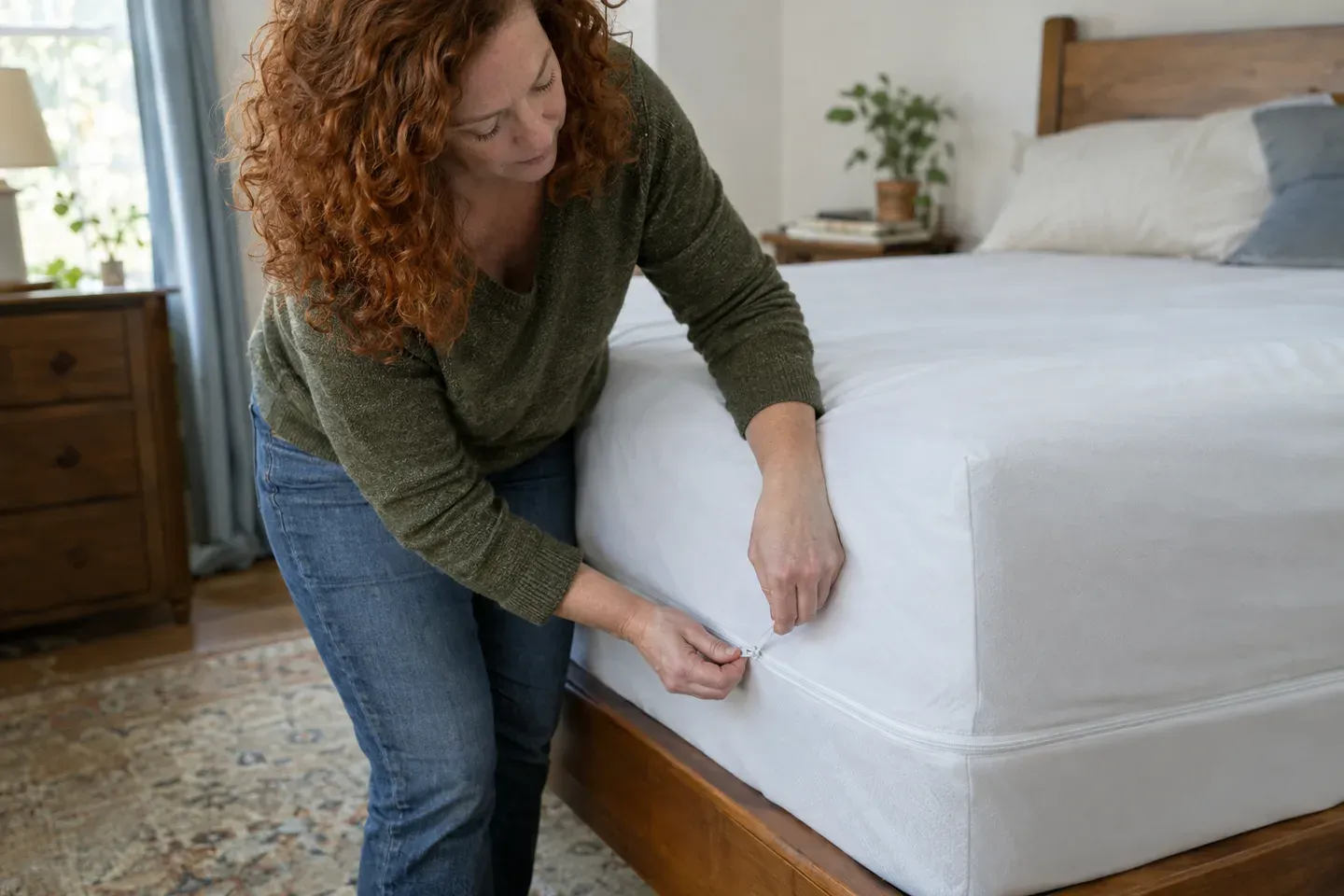
Illustration: zipping a mattress into an encasement.
In Apartments and Shared Buildings
NPIC says sharing walls with neighbors raises your risk, because bed bugs can walk to nearby rooms through cracks in the walls.
- Isolate your unit: door sweeps on the bottom of doors, and sealed cracks around baseboards and light sockets (EPA).
- At a shared laundry, carry clothes in plastic bags, move them from the dryer straight into a bag and fold them at home (EPA). A dryer on high heat can kill bed bugs (EPA).
- If a neighbor has them, treatment works better when it’s coordinated, since bed bugs move between units (NPIC). If you rent, tell your landlord (UC IPM).
At Work, School and Other Public Places
The EPA says offices and classrooms rarely become infested, but they can act as transfer points. Its advice:
- Keep your belongings separate from other people’s.
- If there’s a known problem, store your things in a plastic bin.
NPIC adds: after visiting a place that may have bed bugs, check your clothing, bags and coat.
Catch Them Early
Even with care, a few may get through. Finding them early matters: the EPA says a small infestation is far cheaper and easier to treat than one that has spread.
- Interceptors under each leg of the bed catch bugs on their way to you. UC IPM cites research where they caught six times more bed bugs than people found by searching.
- Look at the bed when you change the sheets (NPIC).
What Doesn’t Prevent Bed Bugs
- Spraying pesticides “just in case.” NPIC says not to use them as a preventive treatment.
- A clean house on its own. Bed bugs feed only on blood, and the University of Kentucky says clean homes are as vulnerable as dirty ones. Cutting clutter helps, because it leaves fewer places to hide.
If you do find them, how to get rid of bed bugs has the full plan, and where do bed bugs come from explains the routes in.
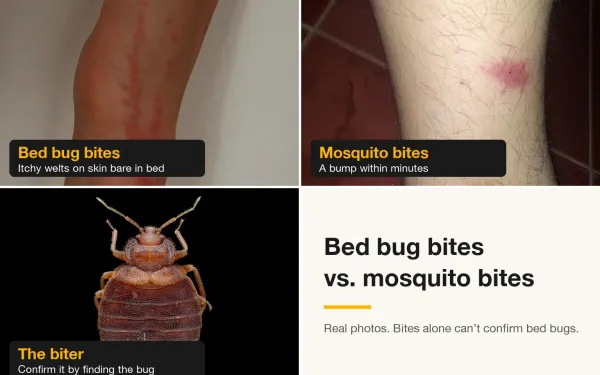
More on bed bugs: bed bug bites and the bed bug Library page.
Common questions
No. Bed bugs feed only on blood, so a clean home can get them as easily as a dirty one (University of Kentucky). Less clutter does help, since it leaves them fewer places to hide (NPIC, EPA).
They help. UC IPM says specially designed encasements help prevent infestations and can seal in any bugs already there. They don’t stop bugs from climbing onto the bed from elsewhere (University of Kentucky), so check them for holes and keep looking for signs.
No. NPIC says not to use pesticides as a preventive treatment, because modern products usually have to hit the bugs to work.
Sources and further reading · 7
- NPIC: Bed Bugs: no preventive pesticides, after trips, used furniture and clothing, clutter, bedding, sealing cracks, shared walls, coordinated treatment, checking clothing and bags.
- EPA: Protecting Your Home from Bed Bugs: used furniture, encasements, clutter, vacuuming, shared laundry, door sweeps and sealing in apartments.
- EPA: Protecting Yourself from Bed Bugs in Public Places: offices and schools.
- EPA: How to Find Bed Bugs: early infestations are cheaper and easier to treat.
- UC IPM: Bed Bugs: how infestations start, secondhand furniture, encasements, interceptors, renters.
- University of Kentucky: Bed Bugs (EF636): encasements don’t stop bugs climbing onto the bed, cleanliness.
- Cover photos: backpack by Ventriloquist (CC BY-SA 4.0); mattress seam by NY State IPM Program at Cornell University (CC BY 2.0); wall by NY State IPM Program at Cornell University (CC BY 2.0); via Wikimedia Commons.