How to Get Rid of Bed Bugs: A Step-by-Step Plan
Getting rid of bed bugs takes a plan, not a spray. EPA says treatment can take weeks to months, and UC IPM says insecticides alone won’t control an infestation. What works is a combination: confirm them, heat what you can, cover the mattress, vacuum, and keep checking.
Time: about Weeks to months. Difficulty: hard. Call a pro if you keep finding live bed bugs or fresh spots after repeating the steps below, or the bugs have spread beyond the bed. UC IPM says confirmed infestations should be managed by trained professionals.
Below are the six steps in order, what to skip, and when it’s time to call a pro.
In this guide:
- How to Check for Bed Bugs
- How to Get Rid of Bed Bugs in 6 Steps
- Do Bed Bug Sprays Work?
- When to Call a Pro
- Common Questions
How to Check for Bed Bugs
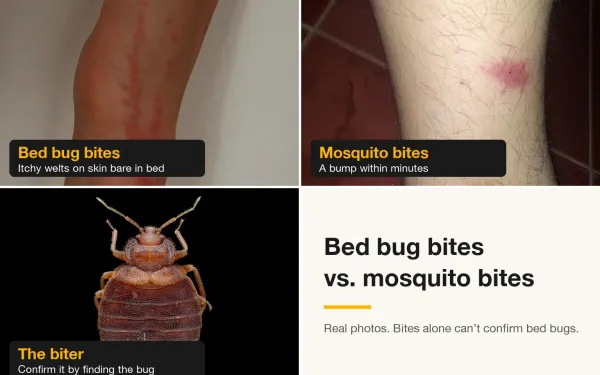
Look for the bugs or their signs, not bites. EPA calls bites “a poor indicator” of bed bugs, and some people don’t react to them at all (what bed bug bites look like). Not sure what’s biting you? Our free bug bite identifier asks a few quick questions to narrow down which bug is likely.
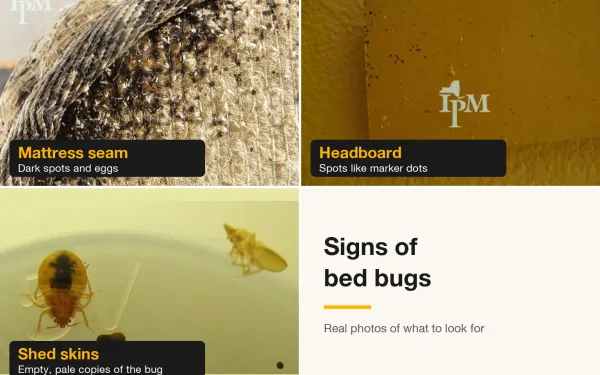
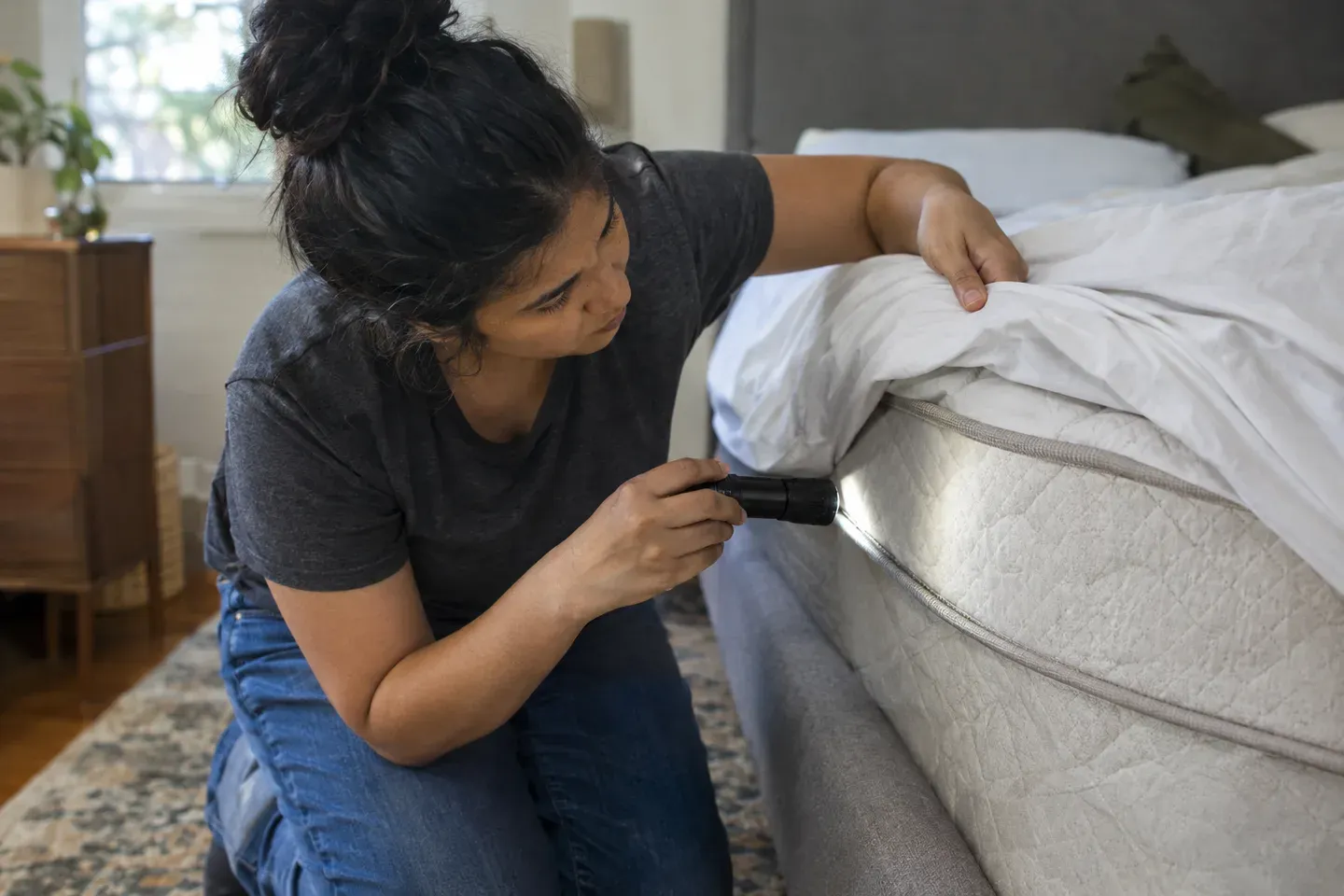
Where: UC IPM says about 85% of bed bugs are found in or near the bed. Check the piping, seams and tags of the mattress and box spring (EPA), then the bed frame, headboard and nearby furniture. Use a flashlight and a magnifying glass (UC IPM). Photos of each sign and a fuller checklist: signs of bed bugs.
What to look for (EPA):
- Dark spots about the size of a printed dot (•): bed bug droppings, which bleed into fabric like a marker would.
- Rusty or reddish stains on sheets or the mattress from crushed bugs.
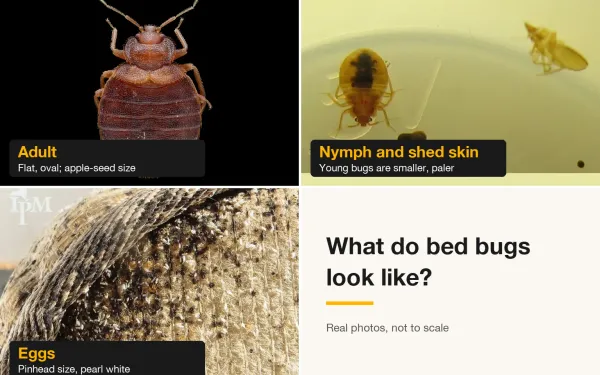
- Eggs and pale yellow shed skins. Eggs are about 1 mm.
- Live bugs: flat, oval and reddish brown. Photos of adults, nymphs and eggs: what do bed bugs look like.
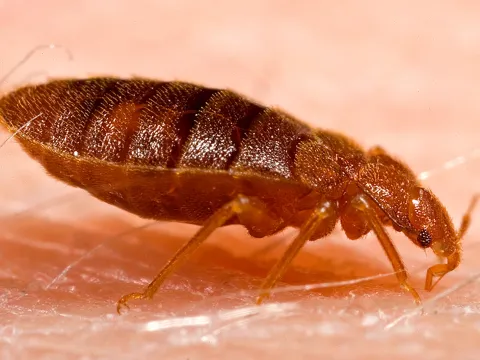 Call a proAdult bed bugFlat, oval, apple-seed shape.
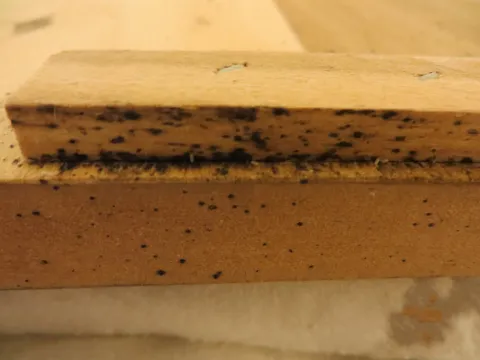 DroppingsInk-like dots along wood and seams.
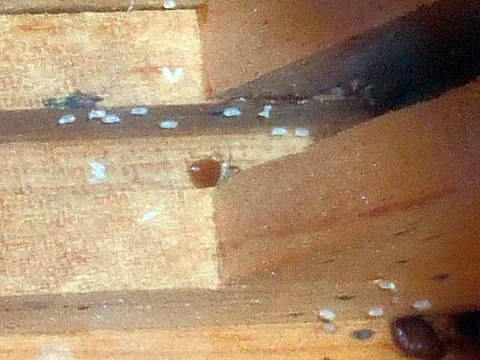 Eggs and adultsWhite eggs, about 1 mm, in cracks.
Not sure? Your county Extension office can identify the bug at no cost (EPA). Common mix-ups are in bugs that look like bed bugs and carpet beetle vs. bed bug. Eggs are covered in bed bug eggs.
How to Get Rid of Bed Bugs in 6 Steps
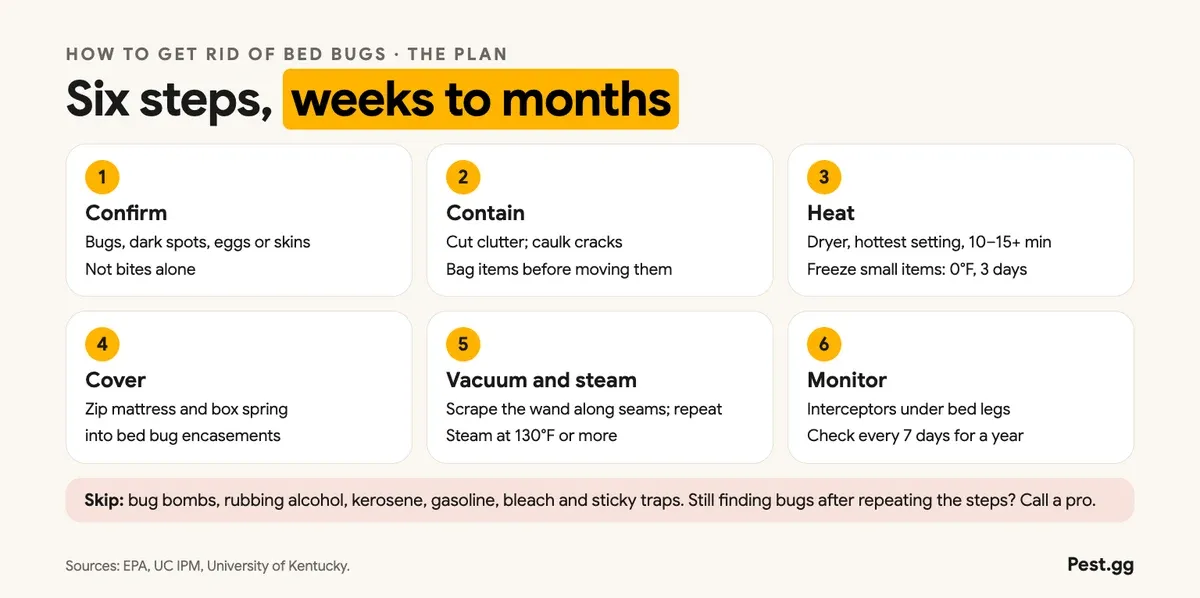
Infographic: the six steps. Sources: EPA, UC IPM, University of Kentucky.
1. Confirm it’s bed bugs
Use the check above. Don’t treat on bites alone: UC IPM says bites should never be used for diagnosis.
2. Contain them
- Cut the clutter. It gives bed bugs fewer places to hide and makes checking easier (UC IPM).
- Seal cracks and crevices near the bed with silicone caulk (EPA).
- Bag items in plastic before you carry them out of the room. The University of Kentucky says bagging keeps bugs from falling off on the way.
- Don’t leave infested furniture on the curb or porch (UC IPM). Wrap it in plastic first.
3. Heat everything you can
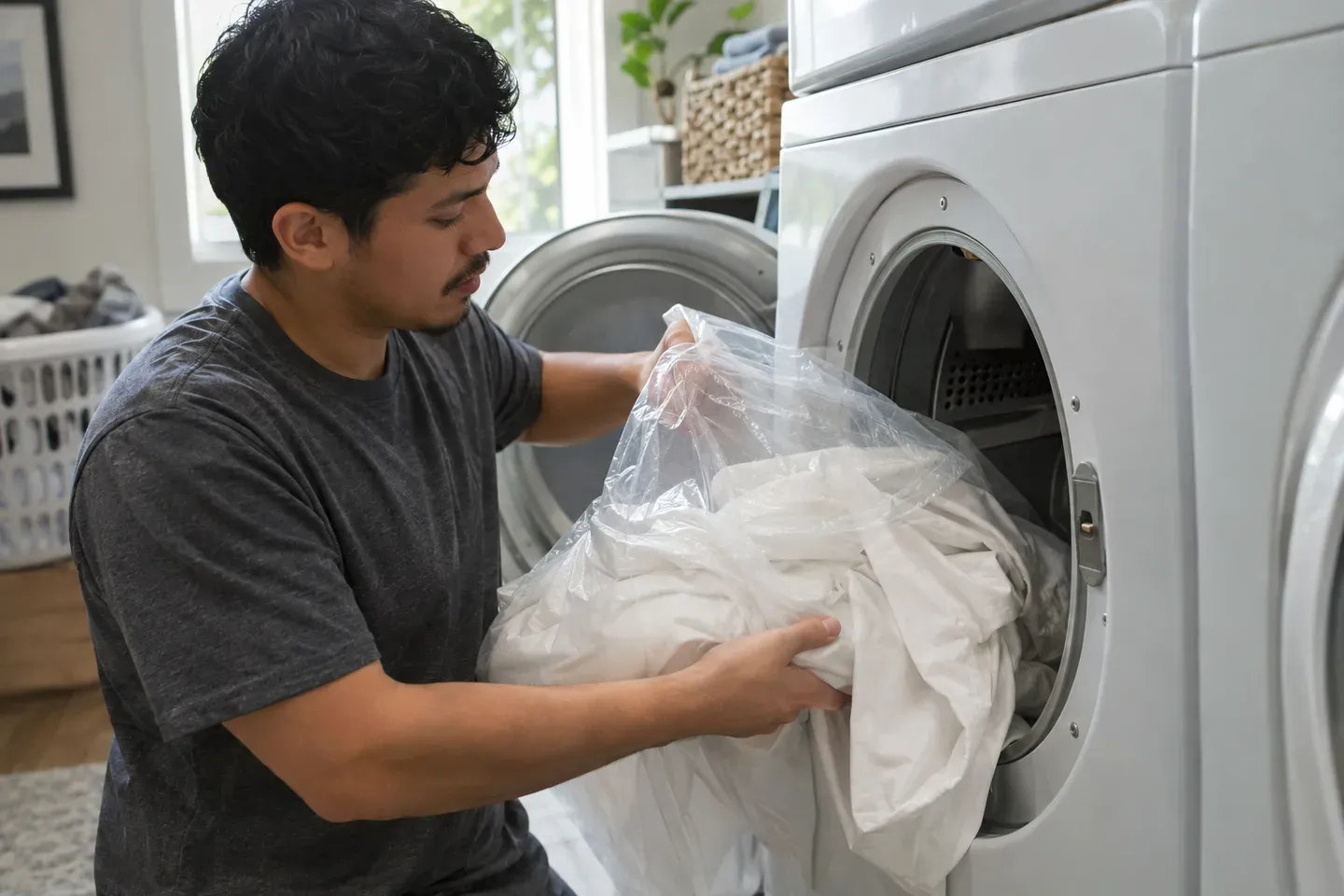
- Laundry: wash bedding and clothing in hot water (120°F), then dry on the hottest setting (UC IPM). The dryer is what does the work: at least 10 to 15 minutes on the hottest setting (UC IPM). Dry items heat up faster (University of Kentucky).
- Shoes, toys, backpacks: these can go in the dryer too, at medium-to-high heat for 10 to 20 minutes (University of Kentucky).
- Things that can’t be heated: seal them in a bag and freeze at 0°F for three days (EPA).
- Don’t heat the house yourself. EPA warns against trying to kill bed bugs by turning up the thermostat or using a space heater or fireplace.
4. Cover the mattress and box spring
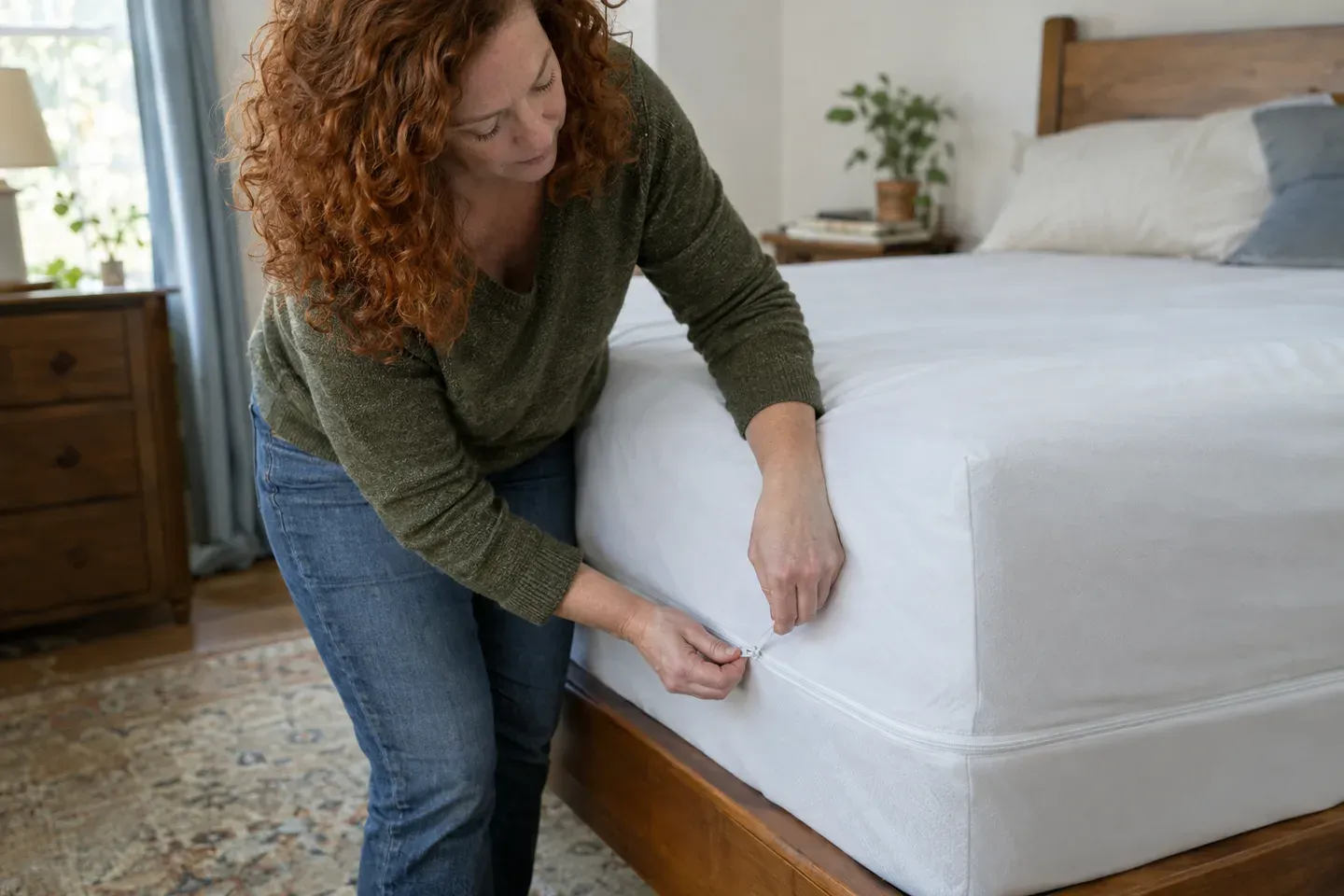
Zip the mattress and box spring into bed bug encasements, covers that seal completely (EPA). Bugs trapped inside eventually starve (UC IPM). UC IPM says encasements have been shown to work in laboratory research.
One limit: the University of Kentucky notes encasements don’t stop bugs from crawling onto the bed and biting. That’s what step 6 is for.
5. Vacuum and steam
- Vacuum slowly, scraping the end of the wand along seams and cracks (University of Kentucky). One pass rarely gets every bug and egg, so repeat it (UC IPM).
- Empty it outside. Seal the bag and put it straight in an outdoor trash can (EPA).
- Steam kills bugs and eggs on contact (University of Kentucky). EPA says the steam must be at least 130°F, without a forceful airflow that scatters the bugs. Neither vacuuming nor steaming leaves anything behind to kill bugs you missed (University of Kentucky).
6. Monitor with interceptors
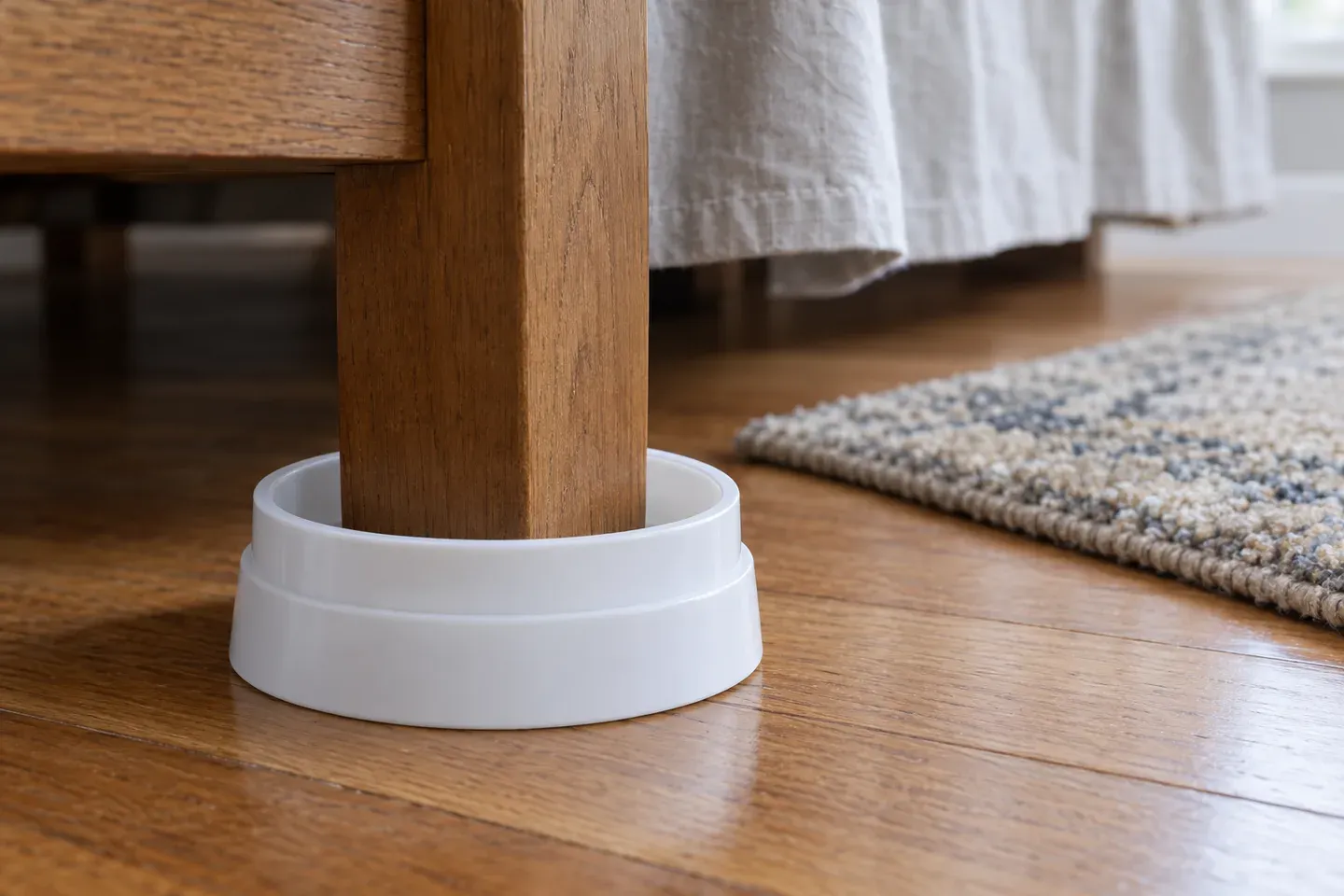
Bed bug interceptors are small plastic dishes placed under each leg of the bed. They catch bugs and stop them from climbing the legs (EPA). Check and clean them every week (EPA).
After the first cleanup, look for signs every few days. Keep checking at least every 7 days, and keep it up for at least a year (EPA). If you find bugs again, some were missed or eggs hatched: repeat the steps (EPA).
Skip sticky traps. EPA says they’re not for bed bugs.
Do Bed Bug Sprays Work?
Not on their own. UC IPM says store-bought sprays labeled for bed bugs “aren’t generally recommended,” and that how well they work in real homes isn’t known. Resistance to pesticides is increasingly common (UC IPM, University of Kentucky).
If you use a product:
- Check the label. Use an EPA-registered pesticide with bed bugs on the label (EPA).
- Desiccant dusts that dry the bugs out can be particularly effective, and bed bugs can’t become resistant to them. They may take several months to work (EPA).
- Not pool or food grade diatomaceous earth. EPA says it shouldn’t be used.
Never use rubbing alcohol, kerosene or gasoline (EPA), or bleach or a lighter (University of Kentucky). They can start fires and harm your family.
Do bed bug bombs work?
No. UC IPM says over-the-counter foggers have been shown to be ineffective for bed bugs. EPA says the spray won’t reach the cracks where bed bugs hide, and too many foggers can cause an explosion. See do roach bombs work for more on foggers.
When to Call a Pro
UC IPM says confirmed bed bug infestations should be managed by trained professionals. Hire a reputable company with bed bug experience (UC IPM). The University of Kentucky says it’s prudent to hire a professional when you can afford it, and that follow-up visits are usually needed.
Call one if:
- You still find live bugs or fresh spots after repeating the steps.
- Bugs turn up beyond the bed: couches, other rooms, wall cracks.
- You can’t do the laundry, bagging and vacuuming the plan needs.
Professional heat treatment heats a room with portable heaters and fans to about 120–130°F (University of Kentucky). UC IPM gives the target as at least 140°F for two hours or 130°F for three hours. It can often clear an infestation in a day, but needs special equipment, may cost more than other methods, and leaves nothing behind to stop new bugs (University of Kentucky).
After professional treatment, keep checking for bed bugs every day (UC IPM).
Common questions
It’s possible. EPA’s do-it-yourself guide says success depends on how far the bugs have spread and how much clutter there is, and you’ll need to keep checking for a year. UC IPM recommends professionals for confirmed infestations.
Weeks to months, depending on the infestation (EPA). Desiccant dusts can take several months (EPA). A professional heat treatment can work in one day (University of Kentucky).
Not necessarily. An encasement traps any bugs inside until they die (EPA, UC IPM). If you do throw it out, wrap it in plastic (University of Kentucky) and don’t leave it on the curb or porch (UC IPM).
Sources and further reading · 5
- EPA: Do-It-Yourself Bed Bug Control: weeks to months, clutter, caulk, encasements, vacuum bags, dryer, freezer at 0°F for 3 days, steam at 130°F, interceptors, sticky traps, labels, desiccants, unsafe products, a year of checking.
- EPA: How to Find Bed Bugs: bites a poor indicator, droppings, stains, eggs and skins, mattress seams.
- EPA: Should I Use a Fogger?: foggers not a sole method, labels, explosion risk.
- UC IPM: Bed Bugs: 85% near the bed, flashlight check, bites not for diagnosis, laundry and dryer, heat targets, encasements, interceptors, vacuuming, clutter, consumer sprays and foggers, resistance, professionals.
- University of Kentucky: Bed Bugs (EF636): dryer times, vacuuming seams, steam, encasements, heat treatment, bagging, unsafe methods, resistance, professionals and follow-ups.