Bugs That Look Like Bed Bugs (and How to Tell for Sure)
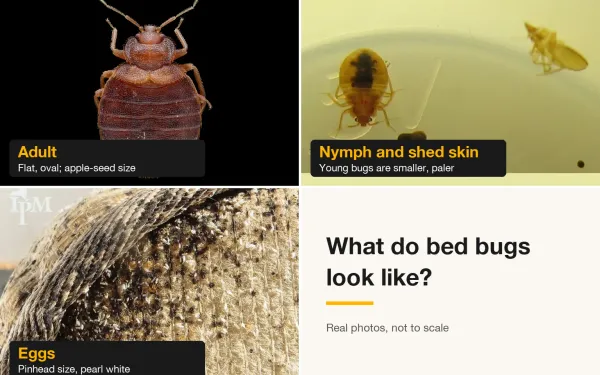
An adult bed bug is flat, oval and reddish brown, about 3/16 to 1/4 inch: the color of an apple seed and about the size of a lentil (University of Kentucky, EPA). It has no wings and doesn’t jump. It walks (Connecticut Agricultural Experiment Station). Photos of each stage are in what do bed bugs look like.
Difficulty: easy. Call a pro if you confirm bed bugs (live bugs, eggs, shed skins or ink-like spots in mattress seams), or find bat bugs and need bats removed from the attic; bats are protected, so use a licensed wildlife professional. Renters should tell the landlord in writing first.
Plenty of bugs come close. EPA warns that getting the ID right is the critical first step, to avoid paying for treatment for the wrong bug. Three checks sort most of them: shape, legs and where you found it. The chart below covers seven common look-alikes.
In this guide:
- Three Checks: Shape, Legs, Place
- Carpet Beetles
- Bat Bugs and Swallow Bugs
- Baby Cockroaches
- Ticks, Fleas and Others
- How to Confirm Bed Bugs
Three Checks: Shape, Legs, Place
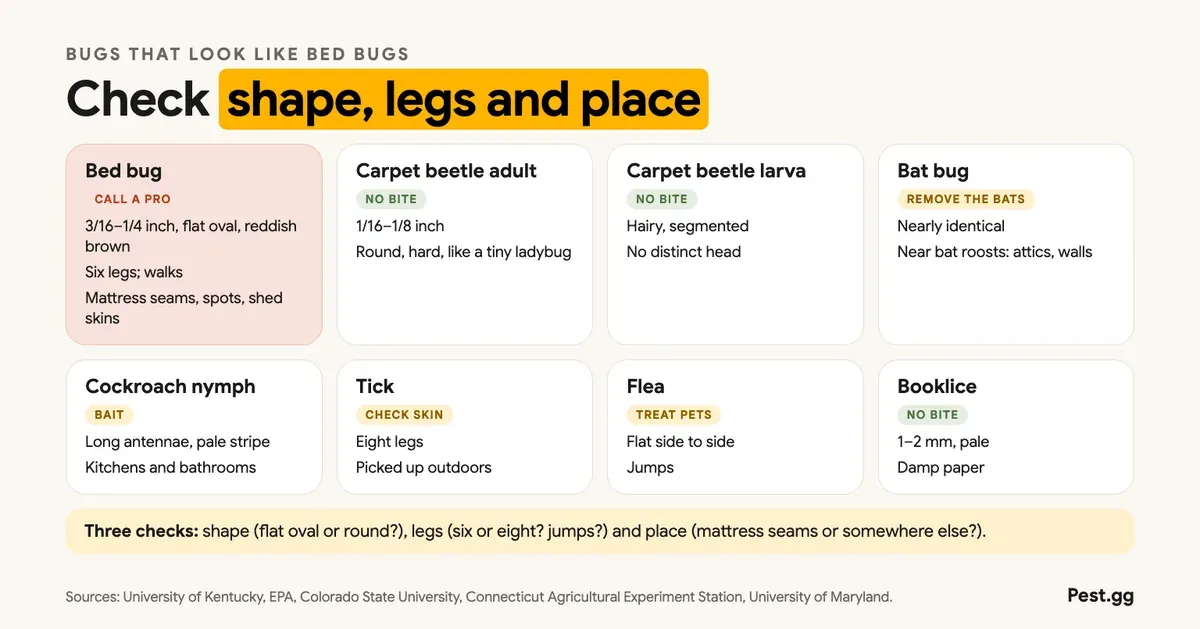
Infographic: bed bugs next to the seven most common look-alikes. Sources: University of Kentucky, EPA, Colorado State University, Connecticut Agricultural Experiment Station.
- Shape. Bed bugs are flat from top to bottom and oval (EPA). Round and hard-shelled means a beetle. Flat from side to side means a flea.
- Legs and movement. Bed bugs have six legs and walk. Eight legs means a tick or a mite. A bug that jumps isn’t a bed bug.
- Place. Bed bugs hide in mattress seams, box springs, bed frames and headboards, with dark spots and shed skins nearby (University of Kentucky). A bug alone on a windowsill or kitchen counter is probably something else.
| Look-alike | How it differs from a bed bug | Where you find it |
|---|---|---|
| Carpet beetle (adult) | Round and hard like a tiny ladybug, 1/16–1/8 in (Univ. of Kentucky) | Rug edges, closets |
| Carpet beetle (larva) | Hairy, segmented, no distinct head (CAES) | Wool, lint, carpet edges |
| Bat bug | Nearly identical; needs magnification (Colorado State) | Near bat roosts: attics, walls, chimneys |
| German cockroach nymph | Long antennae, dark with a pale stripe | Kitchen and bathroom |
| Tick | Eight legs | On people and pets after time outdoors |
| Flea | Flat side to side; jumps (CAES) | Pets and pet bedding |
| Booklice | 1–2 mm, pale, soft (Univ. of Maryland) | Damp paper, boxes, windowsills |
Carpet Beetles
The most common mix-up. EPA lists carpet beetles as easily mistaken for bed bugs.
- Adults are small, 1/16 to 1/8 inch, oval and black or mottled white, brown, yellow and orange (University of Kentucky). They look like tiny round beetles, not flat bugs.
- Larvae are hairy and segmented. The Connecticut Agricultural Experiment Station says they can look like a bed bug’s abdomen but lack a distinct head. The University of Kentucky says they are 1/8 to 1/4 inch, tan to brown and densely hairy.
Carpet beetles eat wool and other natural fibers, not blood. See carpet beetle vs. bed bug for the full comparison.
Bat Bugs and Swallow Bugs
These are close relatives of bed bugs and look almost the same (Colorado State University). The difference is under magnification: in bat bugs, the hairs just behind the head are longer than the width of the eyes; in bed bugs they’re shorter.
The bigger clue is where they are:
- Bat bugs live where bats roost: attics, between walls, chimneys and under shingles. They are usually found one at a time on upper floors, not in groups around beds (Colorado State).
- Swallow bugs feed on cliff and barn swallows and show up near their mud nests, often in spring or fall (Colorado State).
Both can bite people when their hosts leave, but can’t reproduce on human blood (Colorado State). The fix is to exclude the bats or birds, so treating your bed won’t solve it. Colorado State says bats are protected by federal law and recommends professional help.
Baby Cockroaches
The University of Kentucky says bed bugs are sometimes mistaken for cockroaches. Young German cockroaches are small, wingless and dark, with a pale stripe down the back. Unlike bed bugs, they have long, thin antennae and live mostly in kitchens and bathrooms. See baby cockroach for photos.
Ticks, Fleas and Others
- Ticks have eight legs; bed bugs have six. The University of Kentucky says bed bugs are sometimes mistaken for ticks. Ticks are picked up outdoors, on people and pets. See the American dog tick.
- Fleas are flat from side to side and jump (Connecticut Agricultural Experiment Station). See bugs that look like fleas.
- Booklice are pale, 1 to 2 mm and live on damp paper (University of Maryland).
- Kissing bugs are much bigger, 3/4 to 1 3/4 inches, with a long cone-shaped head and red-orange bands along the body (University of Maryland). See kissing bug.
- Seeds and lint can look remarkably like insects to the naked eye; a hand lens helps (Connecticut Agricultural Experiment Station).
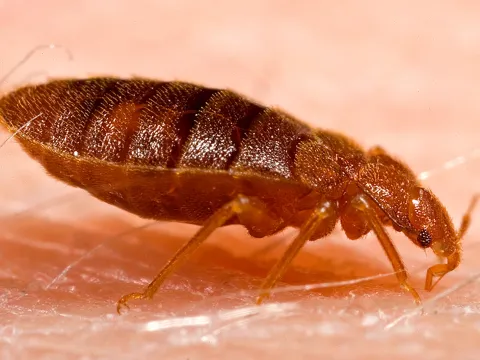 Call a proBed bug3/16–1/4 inch; flat oval; walks.
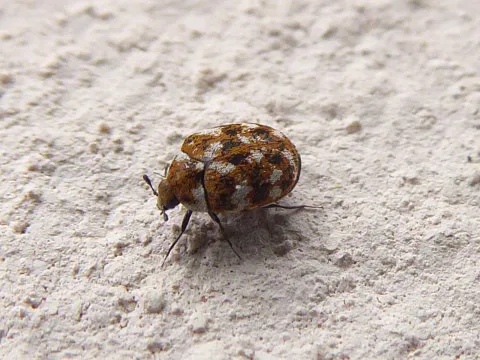 No biteCarpet beetleRound and mottled; eats fabric.
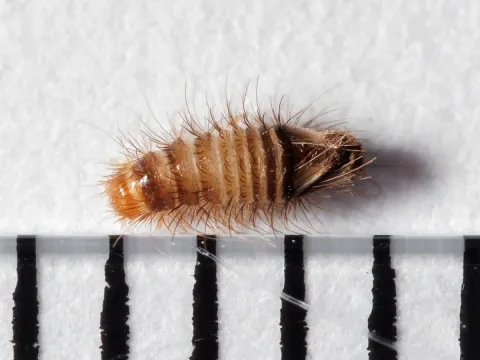 Carpet beetle larvaHairy; no distinct head.
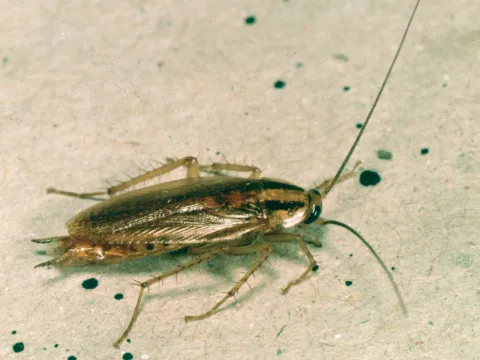 German cockroachLong antennae; kitchens and baths.
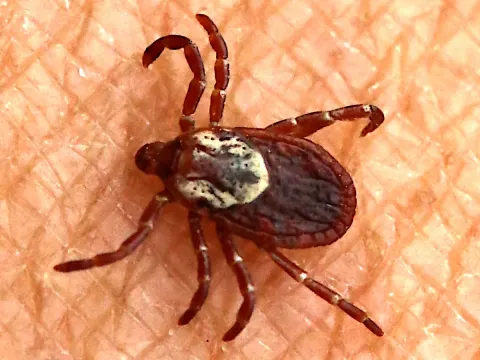 TickEight legs; from outdoors.
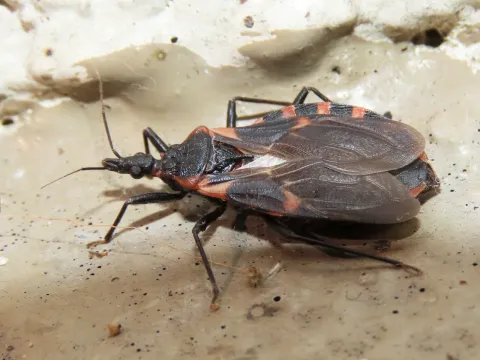 Kissing bug3/4 inch or more; cone-shaped head.
How to Confirm Bed Bugs
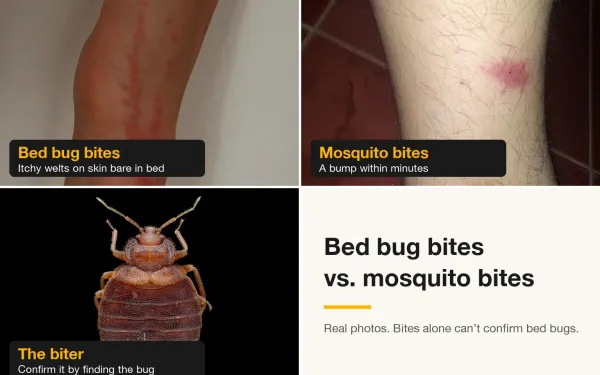
Bites alone can’t tell you. EPA says bed bug bites can look like mosquito or chigger bites, rashes or hives, and some people don’t react at all. UC IPM says skin reactions should never be used to diagnose bed bugs.
Look for the bugs or their signs instead (EPA, UC IPM):
- Dark spots about the size of a period, which may bleed into fabric like a marker.
- Rusty or reddish stains on sheets or mattresses.
- Eggs and eggshells, about 1 mm, and pale shed skins. See bed bug eggs.
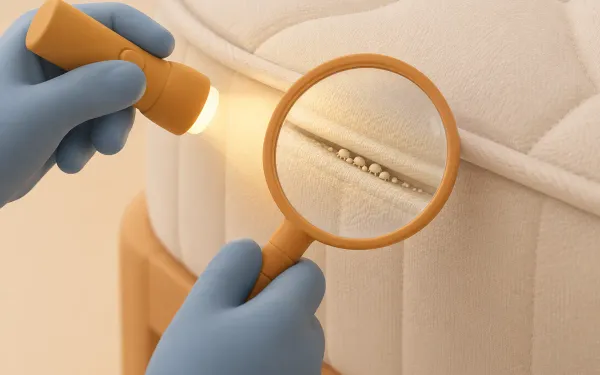
- Live bugs in the mattress piping, seams and tags, box spring, bed frame and headboard.
Catch a sample on clear tape. EPA says your state cooperative extension office may be able to help identify it. You can also identify it from a photo with our free bug identifier. If you rent, tell your landlord in writing before you treat.
Common questions
Carpet beetles, both the round adults and the hairy larvae (EPA, Connecticut Agricultural Experiment Station). Bat bugs are the hardest to tell apart, because they look nearly identical (Colorado State).
No. They eat natural fibers like wool, not blood. The Connecticut Agricultural Experiment Station notes that hairs of the varied carpet beetle larva can irritate skin.
Usually a bed bug nymph, which is pale and as small as 1.5 mm (EPA), or an adult carpet beetle, 1/16 to 1/8 inch (University of Kentucky).
Not on its own. Colorado State says the key step is excluding the bats; afterward, the bugs starve over months. Sealing cracks and a professional’s residual treatment can speed it up.
Sources and further reading · 8
- EPA: Bed Bugs, Appearance and Life Cycle: size, shape, look-alikes, extension help.
- EPA: How to Find Bed Bugs: signs to look for, bites are a poor indicator, carpet beetles mistaken for bed bugs.
- University of Kentucky: Bed Bugs (EF636): size and color, hiding places, mistaken for ticks, cockroaches and carpet beetles.
- Colorado State University: Bed Bug Look-Alikes: bat bugs and swallow bugs, magnified differences, where they live, exclusion.
- Connecticut Agricultural Experiment Station: Bed Bugs and Look-Alikes (PDF): bed bugs walk, carpet beetle larvae, fleas, lice, seeds and lint.
- University of Kentucky: Carpet Beetles (EF601): adult and larva size and colors.
- UC IPM: Bed Bugs: skin reactions can’t diagnose bed bugs; signs.
- University of Maryland Extension: Kissing Bugs and Booklice.