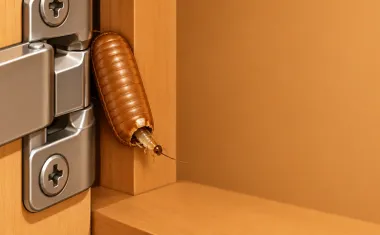
Roach eggs sit inside a brown, bean-shaped case ¼ to ⅜ inch long, with a dozen to 40-plus eggs. Sprays can’t get through it: vacuum up every case, then bait the hatchlings for a month.
Roaches smell musty and oily, from droppings and secretions, and you usually notice it only in a large infestation. Trace it with $10 of sticky traps, then bait and scrub.
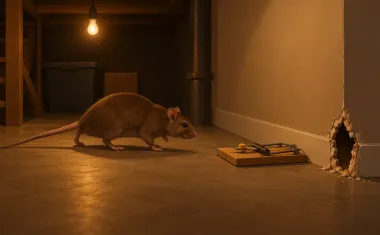
Rats need bigger traps and tougher sealing than mice. Here's the plan, step by step, for about $65–87 in supplies; shared pro quotes for sealing jobs run $1,000–$3,500.
Rats skip traps that are new, too small or off their route. Bait a rat-size trap unset for a few nights, put other food away, then set every trap the same night.
Two dozen snap traps, metal in every gap and food in sealed bins: the whole DIY plan costs $57–71 in supplies, versus a $2,000 median for pro sealing jobs homeowners shared.
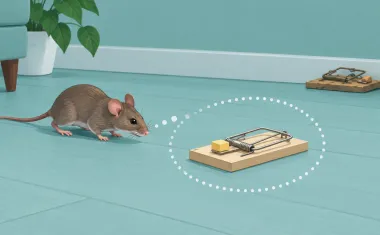
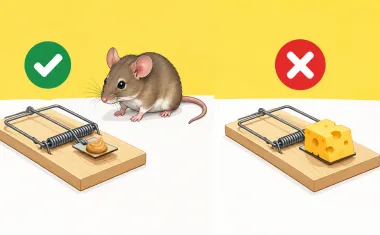
The best bait for mouse traps is a pea-sized dab of peanut butter or a food mice already eat. What to put on a trap, how much, and why mice lick it clean.
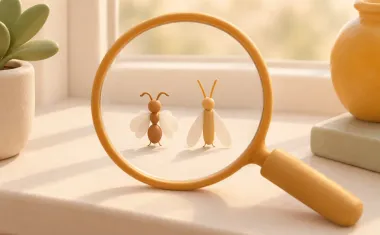
Winged ant or winged termite? Look at the waist, the antennae and the wings, then at what the wood looks like. One is a weekend job; the other needs a licensed inspector.
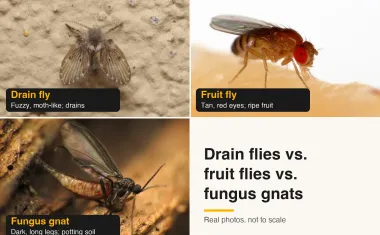
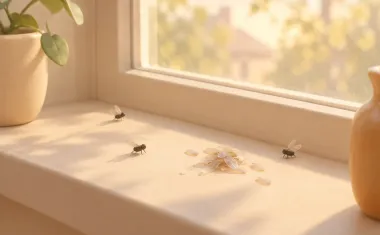
Drain flies are fuzzy and moth-like and sit on bathroom walls; fruit flies are tan with red eyes and hover over fruit. Both are about 1/8 inch, so where they gather is the quickest clue, and one overnight test confirms the source.
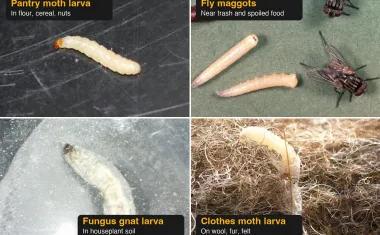
Small white worms indoors are almost always insect larvae, and where you found them tells you which: pantry moths in food, maggots by the trash, drain flies in the sink, fungus gnats in plant soil. Real photos of six, and what to do.
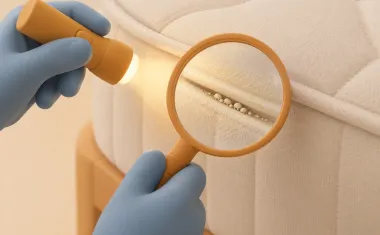
Bed bug eggs are about 1 mm, pearl white and glued in place, usually in clusters along mattress seams. They’re easy to miss and easy to confuse with lint. Here’s how to find them and what kills them.
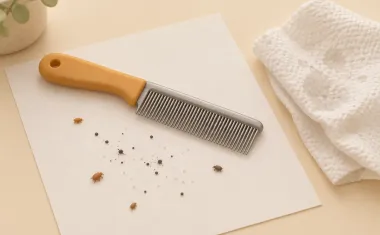
An adult flea is reddish brown, no longer than 1/8 inch and flat from side to side. You’re more likely to spot its eggs and droppings first. Here’s what each one looks like, and a 30-second test for flea dirt.
A termite looks like a soft, pale ant with no waist; swarmers are dark with four equal wings. Most people find swarmers, shed wings or mud tubes first. Real photos of each.