How to Get Rid of Carpenter Ants: Find the Nest, Then Treat It
Carpenter ants are large black, or red and black, ants that dig nests in wood (University of Kentucky). They don’t eat the wood the way termites do. They hollow it out, usually starting where it’s damp or rotting (UC IPM).
Time: about 1–4 weeks. Difficulty: moderate. Call a pro if the nest is inside a wall, ceiling or other spot you’d have to open up, you find soft or damaged structural wood, or ants are still active after several weeks of baiting. Some of the most effective products are for licensed applicators only.
Getting rid of them comes down to the nest. NC State Extension says spraying the ants you see only repels them and sends them elsewhere, possibly elsewhere indoors, and they come back. The steps below show how to find the nest with a free honey-water trick, then treat it or let bait carry the poison home.
In this guide:
- Is It Really Carpenter Ants?
- Step 1: Find the Nest
- Step 2: Bait the Colony
- Step 3: Treat the Nest Directly
- Step 4: Fix the Damp Wood
- When to Call a Pro
Is It Really Carpenter Ants?
- Big ants of mixed sizes. Workers are 1/4 to 5/8 inch, and different sizes come from the same colony (NC State). The University of Kentucky gives 3/8 to 1/2 inch for common workers.
- One bump at the waist and an evenly rounded back seen from the side (UC IPM).
- Sawdust piles like pencil shavings, often with bits of insects in it (NC State).
- Rustling sounds in walls from a mature colony (NC State).
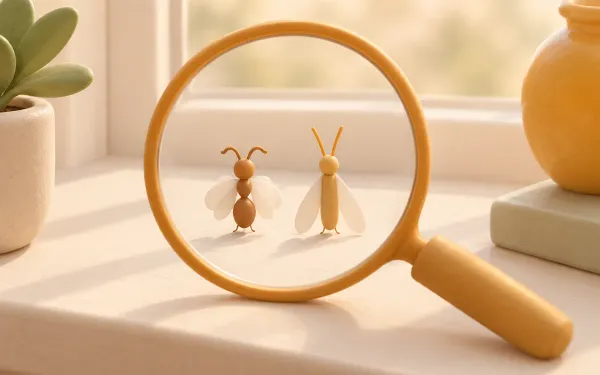
Winged ants coming out indoors suggest a nest in or under the house (NC State, University of Kentucky). If the winged insects have straight antennae and equal wings, they may be termites: see carpenter ants vs. termites.
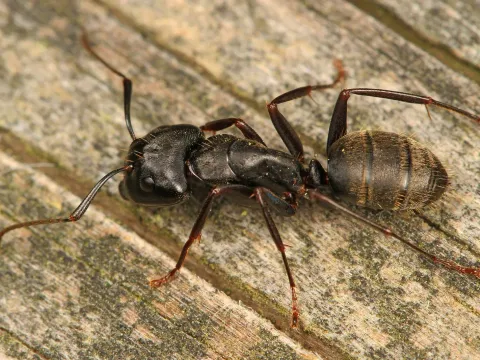 Carpenter ant1/4–5/8 inch; black or red and black.
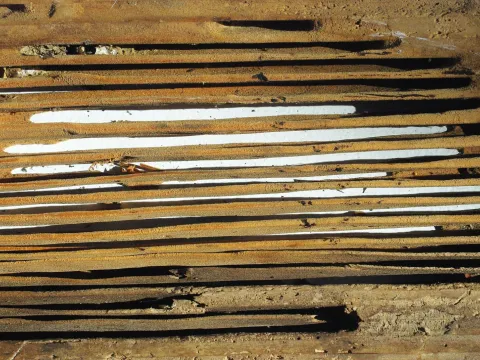 Carpenter ant galleriesSmooth tunnels along the grain.
Step 1: Find the Nest
Finding the nest is the most important part of carpenter ant control (University of Kentucky).
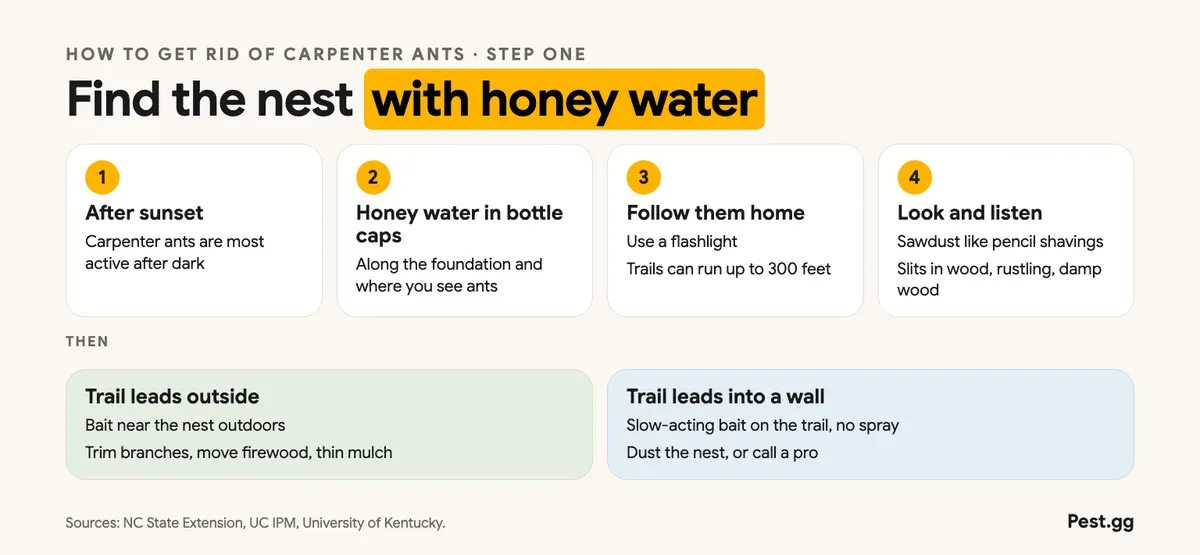
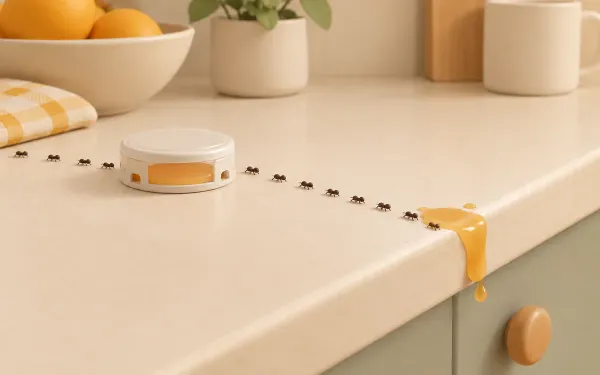
Infographic: the honey-water trick and where nests hide. Sources: NC State Extension, UC IPM, University of Kentucky.
- Wait until dark. Carpenter ants are most active after sunset (UC IPM, NC State).
- Set out honey water. NC State suggests small amounts of honey mixed with water in bottle caps along the foundation. UC IPM suggests sugar mixed with an equal amount of milk, or diced crickets or mealworms from a pet store.
- Follow the ants with a flashlight as they carry it home. NC State says the nest is usually nearby but can be up to 300 feet away.
- Look and listen near the trail: sawdust piles, slit-like openings in wood, rustling in walls, and damp wood near leaks, windows, doors and roofs (NC State).
Common indoor nest spots include wall voids, attics, insulation, hollow doors, window and door frames, and voids under kitchen and bathroom cabinets (NC State).
Nest outdoors? Common spots are tree holes, stumps, logs, dead trees, woodpiles and planter boxes (NC State, UC IPM). Indoor nests are often satellites of a larger parent nest outside (UC IPM).
Step 2: Bait the Colony
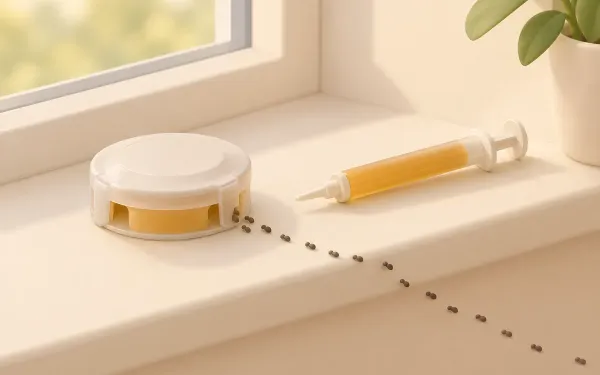
Bait works because workers carry it back to share with the colony. Only about 10% of the ants are out foraging at any one time (UC IPM), so killing the ones you see doesn’t reach the rest.
- Use slow-acting bait labeled for ants (UC IPM, University of Kentucky). NC State names hydramethylnon, avermectin and boric acid baits.
- Feed them first. UC IPM says carpenter ants are finicky: start with a non-toxic food like sugar milk, then once they’re feeding, swap in a few different ant baits and let them choose.
- Put it on the trail, where they’re feeding, not just where you saw one ant.
- No spray near the bait. NC State says ants will avoid bait in sprayed areas.
- Check and refill baits as they’re eaten (University of Kentucky).
Ants clustering at the sink? They may be after water, not food, and may not take bait right away (NC State).
If activity stays about the same after several weeks, NC State says it’s time for the next step.
Step 3: Treat the Nest Directly
Once you know where the nest is, it can be treated directly (UC IPM, University of Kentucky).
- Dusts with borates or desiccants (like diatomaceous earth) are effective; you may need to drill small holes to reach the nest (UC IPM). UC IPM says desiccant dusts are low in toxicity and keep working as long as they stay dry, but avoid breathing them.
- Sprays containing pyrethroids such as permethrin can be applied into the nest (UC IPM).
- Drilling into structural wood may be best left to a professional (University of Kentucky).
Always follow the product label. Some of the most effective products, like fipronil sprays, are for licensed applicators only (UC IPM, University of Kentucky).
Step 4: Fix the Damp Wood
Carpenter ants are usually tied to moisture (NC State). Without this step they tend to come back.
- Fix leaks in roofs, plumbing and outdoor spigots, and clean clogged gutters (NC State, UC IPM).
- Replace soft or rotting wood (UC IPM, University of Kentucky). If damage is severe, NC State says replacing the wood and removing the nest may matter more than any treatment.
- Trim branches at least 12 inches from the house (NC State).
- Store firewood off the ground and away from the house, never on the porch or against a wall (NC State, UC IPM).
- Keep mulch around the foundation to 2 to 3 inches deep (UC IPM).
- Seal entry points like where utility lines come in, and dry out crawl spaces (UC IPM, NC State).
When to Call a Pro
Call a licensed pest control company if:
- The nest is inside a wall or ceiling and would need opening up.
- You find soft or damaged structural wood.
- Bait hasn’t cut activity after several weeks (NC State).
The University of Kentucky says carpenter ant infestations are most commonly handled by pest control professionals, who have the training, tools and products for hidden nests.
For smaller ants in the kitchen, see how to get rid of sugar ants and ant traps. For why the queen keeps a colony going for years, see how long do ants live.
Common questions
Often. Carpenter ants usually start nests in wood that’s damp or decayed from water damage, then expand into sound wood (UC IPM). Look for leaks near where you find them.
Unlikely while they have damp wood and a nest. Colonies grow slowly but can live for years (NC State). Finding and treating the nest, and fixing the moisture, is what ends it.
Not to your health. The University of Kentucky says they don’t pose health threats and bite only if their nest is disturbed or they’re picked up. The risk is to the wood: given time, damage can be significant (University of Kentucky).
NC State says no: spraying where you see them only repels them and sends them elsewhere, and they return when the residue wears off. Use bait, find the nest and treat it.
Sources and further reading · 3
- NC State Extension: Biology and Control of Carpenter Ants: sizes, signs, nest sites, honey water trick, 300-foot trails, why spraying fails, baits, moisture fixes.
- UC IPM: Carpenter Ants: identification, satellite nests, sugar milk, 10% foraging, finicky feeders, dusts and sprays, prevention.
- University of Kentucky: Carpenter Ants (EF603): size, health, finding the nest, baits, drilling, professionals.