Fire Ant Bites: What They Look Like and What to Do
Fire ant “bites” are really stings. The ant grips your skin with its jaws, then stings and injects venom (OSHA). It burns right away, which is where the name comes from (UC IPM). Within a day or two, a white pustule forms at each sting (Texas A&M AgriLife).
Difficulty: easy. Call a pro if fire ant mounds keep coming back in a play area or along a path after two rounds of bait, or the ants are nesting in walls, electrical boxes or under the slab.
Texas A&M says the stings are not usually life-threatening. The main risks are infection if the pustules break, and, for a small number of people, a serious allergic reaction. Below: what to expect day by day, simple care, and the warning signs that mean emergency care.
Not a medical diagnosis. If you’re unsure or worried, talk to a doctor or pharmacist.
In this guide:
- What Fire Ant Bites Look Like
- When to Get Emergency Help
- What to Do After Fire Ant Bites
- Other Ant Bites
- How to Avoid Fire Ant Stings
What Fire Ant Bites Look Like
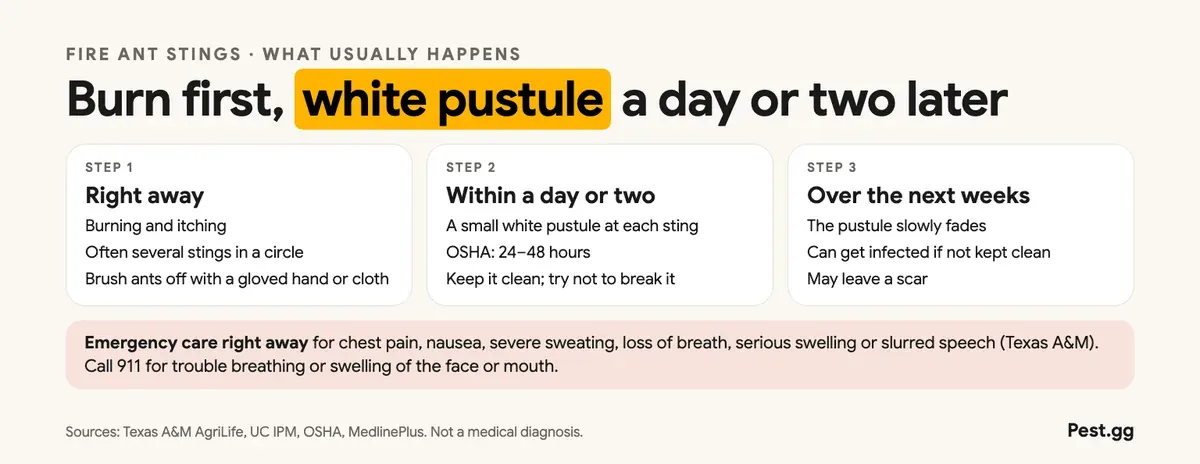
Infographic: what a fire ant sting usually does over time, and the emergency signs. Sources: Texas A&M AgriLife, UC IPM, OSHA.
- Right away: burning and itching (Texas A&M, UC IPM). Fire ants pivot at the head and sting several times in a circle (OSHA), so you often get a small cluster of stings.
- Within a day or two: a white pustule forms at each sting. OSHA says 24 to 48 hours; Texas A&M says “a day or two.” OSHA describes the pustule as a small, firm, blister-like sore.
- Over the next weeks: UC IPM says the pustules take several weeks to go away. They can get infected if not kept clean and may leave permanent scars (UC IPM, Texas A&M).
Many stings at once is normal for fire ants. UC IPM says red imported fire ants are much more aggressive than other ants when their nest is disturbed and quickly climb onto the person. A single ant can sting again and again. Not sure it was a fire ant? Our free bug bite identifier can help narrow down which bug likely bit you.
When to Get Emergency Help
Texas A&M AgriLife says to take the person to an emergency medical facility immediately if a sting leads to:
- Chest pain
- Nausea
- Severe sweating
- Loss of breath
- Serious swelling
- Slurred speech
UC IPM adds dizziness and shock. OSHA says to get medical attention right away, especially for shortness of breath or swelling.
Call 911 for trouble breathing, swelling anywhere on the face or in the mouth, or throat tightness (MedlinePlus). Texas A&M says some people can go into a coma from even one sting.
See a doctor if a pustule looks infected, or if you’ve reacted badly to stings before. Texas A&M says people who become sensitive to fire ant stings should see an allergist.
What to Do After Fire Ant Bites
- Move away from the mound and brush the ants off with a gloved hand or a cloth (OSHA). Don’t just swat; they hold on with their jaws.
- Keep the area clean. UC IPM says the pustules can become infected if not kept clean, and OSHA says they can become sites of infection.
- Try not to scratch or break the pustules.
- Ease pain and itch. Texas A&M suggests an insect bite remedy with benzocaine or other ingredients that deaden pain and protect against infection. OSHA says to ask your pharmacist how to treat minor stings. Follow the product label.
- Watch for the emergency signs above.
Other Ant Bites
“Ant bites” from other ants are usually milder. UC IPM says ants can bite with their jaws, but most species rarely do.
- Carpenter ants can bite if you disturb their nest or pick one up (University of Kentucky). UC IPM says they can’t sting but can bite painfully and spray formic acid into the wound.
- Harvester ants and native fire ants also sting (UC IPM).
- Small kitchen ants like odorous house ants are a nuisance, not a bite problem. See how to get rid of sugar ants.
How to tell a fire ant: workers of mixed sizes, 1/16 to 1/5 inch, dark reddish brown, living in mounds of loose soil, often in lawns (UC IPM).
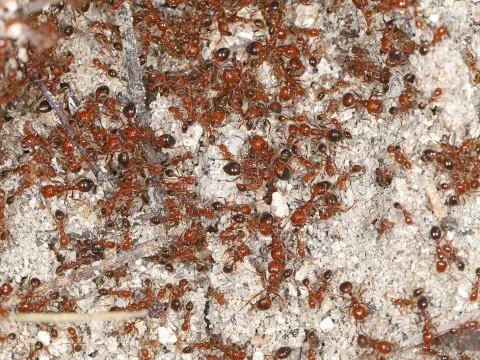 StingsRed imported fire ants1/16–1/5 inch; mixed sizes; reddish brown.
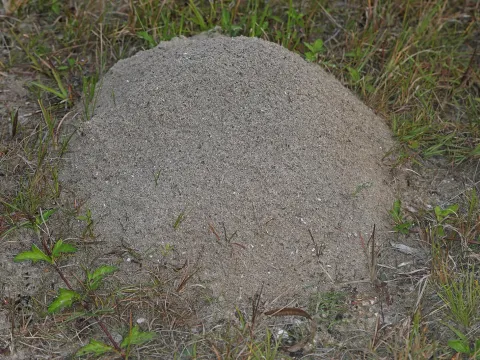 Keep awayFire ant moundLoose soil; no hole on top.
How to Avoid Fire Ant Stings
- Know where the mounds are. Don’t stand on mounds or where the ants are foraging (OSHA). Teach children and visitors to recognize them (Texas A&M, UC IPM).
- Cover up. Wear shoes or boots and tuck pant legs into socks (OSHA, Texas A&M). OSHA also suggests DEET or picaridin repellent on clothes and footwear.
- Treat the mounds where people and pets go (Texas A&M). UC IPM recommends fire ant baits; mound drenches and broadcast sprays mostly kill foragers and don’t give good long-term results.
The fire ant queen can live for years, which is why bait works better than spray: see how long do ants live. For baits and traps, see ant traps.
Common questions
Both. They grip with their jaws and then sting (OSHA). The sting injects the venom that causes the burning and the pustule.
The pustule forms within a day or two and can take several weeks to disappear (Texas A&M, UC IPM).
We found no extension or government source that recommends it. UC IPM and OSHA warn that the pustules can become infected and may scar. Keep them clean, and see a doctor if one looks infected.
Usually not life-threatening, says Texas A&M, but they can get infected. A small percentage of people are allergic (UC IPM). Chest pain, trouble breathing, serious swelling or slurred speech after a sting need emergency care right away (Texas A&M).
Sources and further reading · 7
- Texas A&M AgriLife Extension: Fire Ant Medical Information: symptoms, pustule in a day or two, infection and scars, allergist, emergency signs, benzocaine remedy, prevention.
- UC IPM: Red Imported Fire Ant: burning sting, aggressive behavior, repeated stings, white pustule lasting weeks, allergy signs, baits.
- OSHA: Fire Ants Fact Sheet (PDF): grip and sting, circular stings, pustule in 24 to 48 hours, infection, prevention, pharmacist, when to get medical help.
- MedlinePlus: Insect Bites and Stings: when to call 911.
- UC IPM: Ants: most ants rarely bite; which ants sting.
- UC IPM: Carpenter Ants: bites and formic acid.
- University of Kentucky: Carpenter Ants (EF603): when carpenter ants bite.