Types of Cockroaches: The 5 You Find in U.S. Homes
Size, color and where you see them tell you which roach you have, and the fix depends on it.
Five types of cockroaches cause most problems in U.S. homes: the German, brown-banded, oriental, American and smokybrown cockroach. Size and the place you see them are the quickest clues. A light brown roach about ½ inch long in the kitchen or bathroom is almost always a German cockroach, by far the most common in homes (University of Kentucky). A big reddish-brown one in the basement or by a floor drain is an American cockroach; a shiny, nearly black one in a damp basement is an oriental cockroach.
Difficulty: easy. Call a pro if you see German cockroaches in daylight, they’re in several apartments in your building, or baits haven’t cut their numbers after a few weeks.
It matters because they live in different places and need different fixes. This guide compares the five, shows how to tell which one you have, and points you to the right plan. We haven’t collected cockroaches ourselves; it rests on UC IPM, University of Kentucky, Penn State and NC State Extension guidance.
The 5 Common House Cockroaches Compared
| Cockroach | Adult size | Color and markings | Where you see it | Flies? |
|---|---|---|---|---|
| German | About ½ in | Light brown, 2 dark stripes behind the head | Kitchens, bathrooms, under sinks, behind appliances | No (Penn State) |
| Brown-banded | About ½ in | Golden tan to brown, 2 light bands across the wings | Anywhere, often high: cabinets, ceilings, picture frames | Males sometimes; females can’t (UC IPM) |
| Oriental | 1–1¼ in | Shiny, almost black; short wings | Cool, damp places at ground level: basements, drains | No (UC IPM) |
| American | 1½–2 in | Reddish brown, pale band around the shield behind the head | Basements, crawl spaces, floor drains, sewers | Wings, but seldom flies (Univ. of Kentucky) |
| Smokybrown | About 1½ in | Uniform dark brown to mahogany | Mostly outdoors; attics and upper parts of buildings | Yes, on warm humid evenings (UC IPM) |
Sizes and markings from UC IPM and the University of Kentucky.
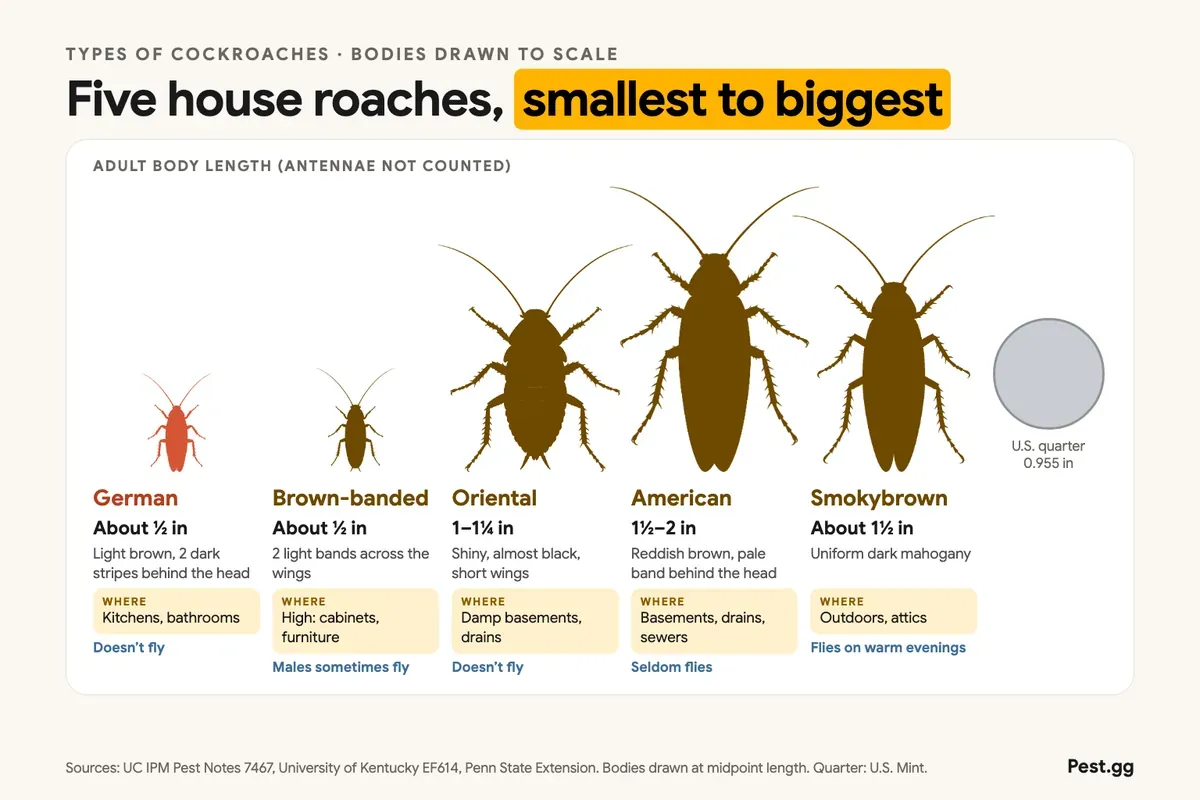
Infographic: the five house cockroaches to the same scale beside a quarter. Sources: UC IPM, University of Kentucky, Penn State.
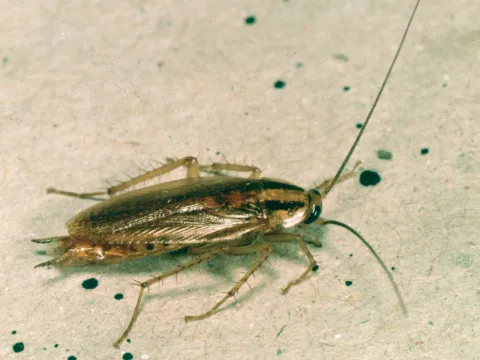 Most commonGermanAbout ½ inch, two dark stripes. Kitchens and bathrooms.
 Up highBrown-bandedAbout ½ inch, two light bands. High in cabinets and furniture.
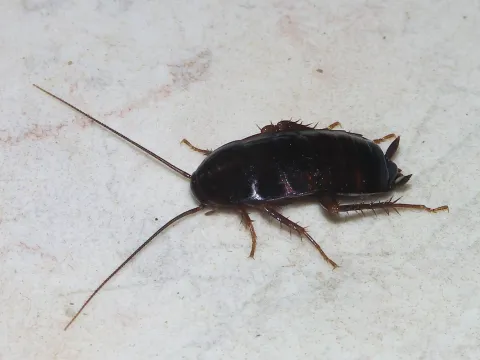 Ground levelOriental1 to 1¼ inches, nearly black. Damp basements and drains.
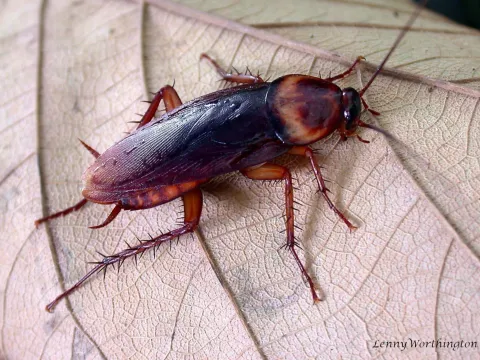 BiggestAmerican1½ to 2 inches, reddish brown. Basements, drains, sewers.
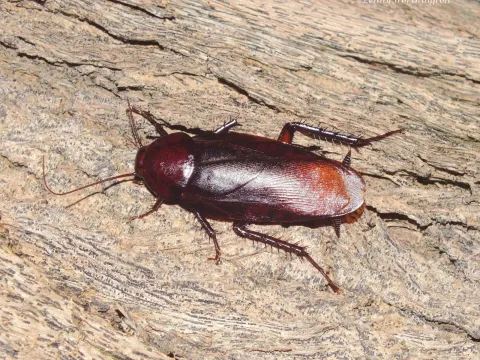 FliesSmokybrownAbout 1½ inches, dark mahogany. Outdoors, attics.
German Cockroach: The Kitchen Roach
The German cockroach is about ½ inch long and light brown, with two dark stripes on the shield behind its head (UC IPM). The University of Kentucky calls it by far the most common cockroach infesting homes and buildings. It lives indoors near food and water, in warm, humid spots around 70 to 75°F (UC IPM): cracks under sinks and toilets and behind appliances (University of Kentucky). It has full wings but doesn’t fly (Penn State).
It’s the hardest to get rid of because it breeds so fast. A female carries her egg case until a day or two before it hatches, and each case holds about 30 young (UC IPM). Gel bait in small, pea-sized dots near hiding spots works well, and sprays shouldn’t go where bait is, because they can repel roaches from it (NC State Extension). Start with how to get rid of German roaches.
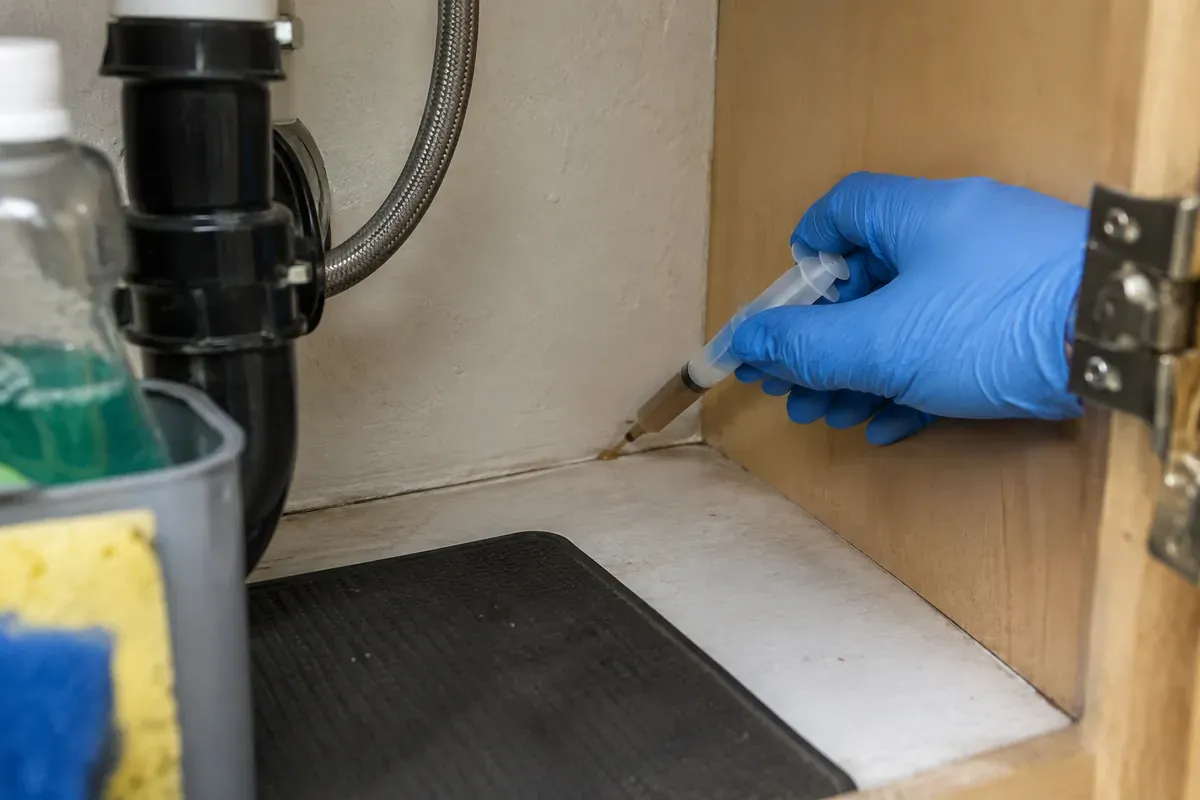
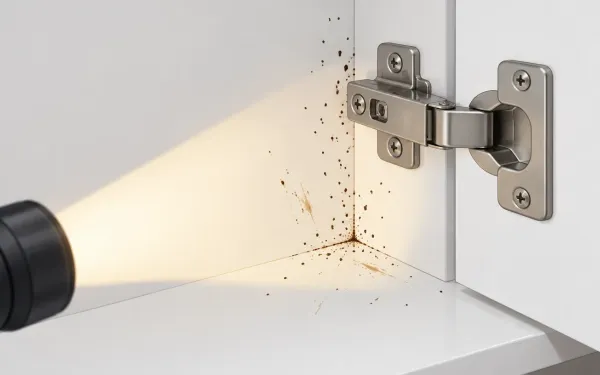
Illustration: a pea-sized dot of gel bait in a crack near where German cockroaches hide.
Brown-Banded Cockroach: The One Up High
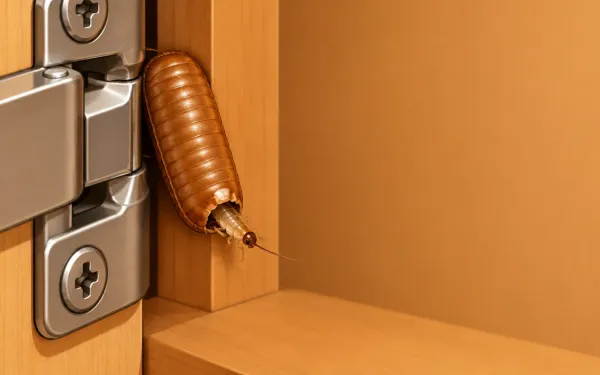
About the same size as a German cockroach, but with two light bands across the wings instead of stripes behind the head; males are golden tan and females darker brown (UC IPM). It turns up anywhere in a home, often higher up than German cockroaches: ceilings, upper cabinets, closets, behind picture frames and inside furniture (University of Kentucky), and near electrical appliances (UC IPM). Females glue their egg cases to ceilings and beneath furniture (UC IPM).
UC IPM says brown-banded cockroaches are especially difficult to control with baits, so bait placement has to follow them into those high spots. They’re far less common than German cockroaches (University of Kentucky).
Oriental Cockroach: The Damp-Basement Roach
About 1 to 1¼ inches long and shiny, almost black; males have wings shorter than the body and females barely any (UC IPM, University of Kentucky). It prefers cool, dark, damp places: basements, crawl spaces, floor drains, sump pumps and water meter boxes, and it stays at ground level because it can’t fly or climb smooth vertical surfaces (UC IPM). It develops slowly, taking 1 to 2 years or more from nymph to adult (UC IPM).
The fix is drying out and sealing: damp basements, leaky pipes and drains are where it lives. Water bug vs. cockroach covers the “water bug” name it often goes by.
American Cockroach: The Biggest One
About 1½ to 2 inches long and reddish brown, with a pale yellowish band around the edge of the shield behind its head (University of Kentucky, UC IPM). It likes warm, humid places above about 82°F, such as sewers and storm drains (UC IPM), and in homes it gathers in basements, crawl spaces, floor drains, sump pumps and laundry areas (University of Kentucky). Its wings are well developed, but it seldom flies (University of Kentucky). “Palmetto bug” is a regional name for it, and for the smokybrown and oriental cockroaches too (University of Georgia).
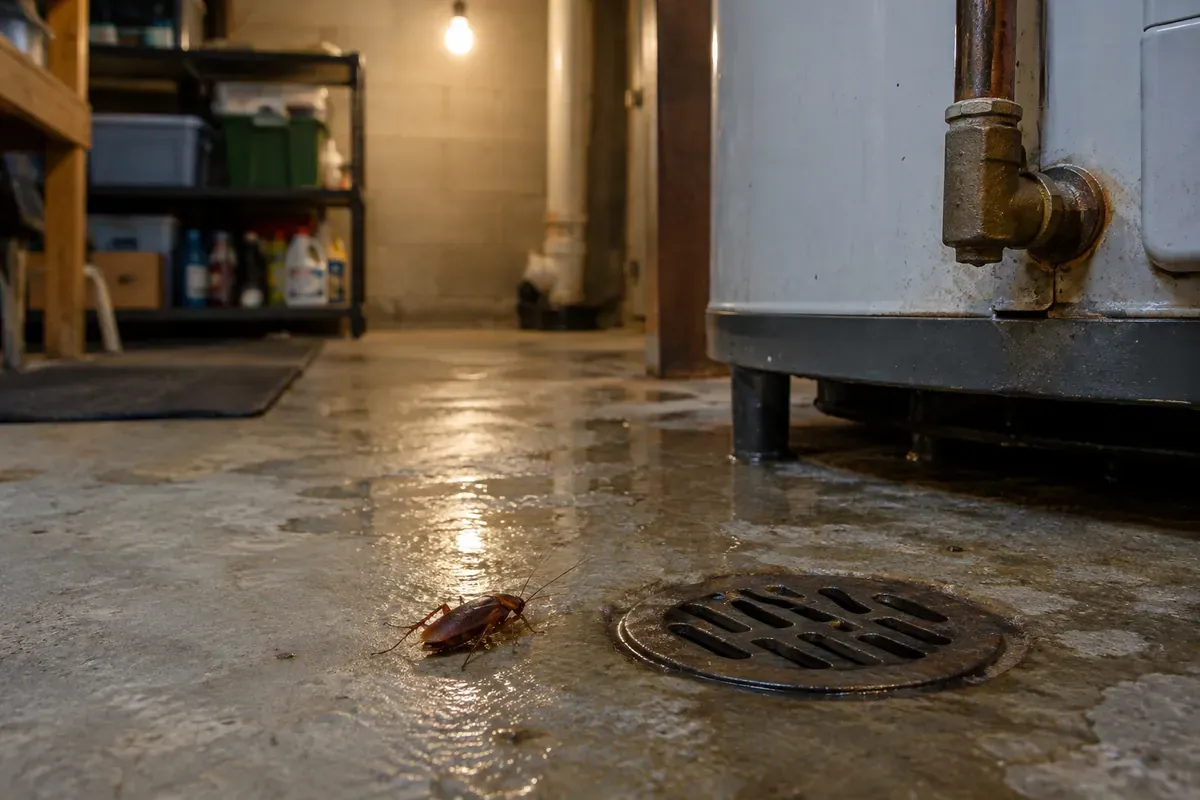
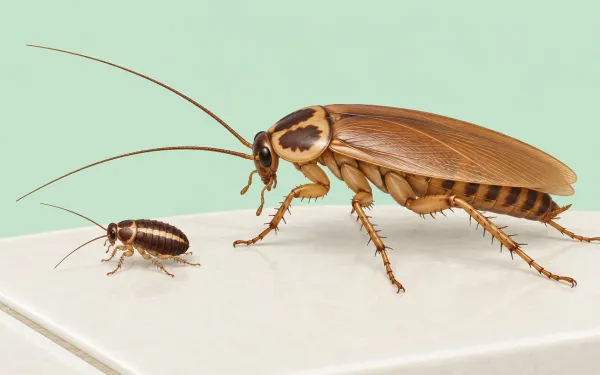
Illustration: a big reddish-brown roach by a basement floor drain, the classic American cockroach spot.
It breeds more slowly than the German cockroach, but the University of Kentucky says long-term relief means finding and treating the drains, crawl spaces and other areas where it lives.
Smokybrown Cockroach: The Outdoor Flier
About 1½ inches long and a uniform dark brown to mahogany (UC IPM). It lives mostly outdoors, in plantings, woodpiles, garages and water meter boxes, and prefers the upper parts of buildings, sometimes taking refuge in attics (UC IPM). Adults fly, especially on warm, humid evenings (UC IPM). Each egg case produces about 40 to 45 nymphs (UC IPM).
Because it lives mostly outside, look at the plantings, woodpiles and gaps next to the house, not just the kitchen.
How to Tell Which Cockroach You Have
The University of Kentucky’s approach: note where you see them, when, and how big they are.
- Where? Kitchen or bathroom points to German cockroaches. Basement, crawl space or drains point to American or oriental. High in cabinets, closets or furniture points to brown-banded.
- How big? About ½ inch: German or brown-banded. About 1 inch and nearly black: oriental. 1½ inches or more and reddish brown: American; uniform dark mahogany: smokybrown.
- Stripes or bands? Two dark stripes behind the head: German. Two light bands across the wings: brown-banded.
- Daytime? Cockroaches are more active at night, so seeing them in daylight can mean a heavy infestation (University of Kentucky).
- Babies or eggs? Small wingless roaches and egg cases tell you they’re breeding inside; see baby cockroaches and cockroach eggs. Pepper-like droppings are covered in cockroach poop.
Which Plan Fits Your Cockroach
| You have | Start with |
|---|---|
| German | Gel bait in many small spots and no sprays near it; how to get rid of German roaches |
| Brown-banded | Bait and traps in the high spots where they hide; how to get rid of roaches |
| Oriental | Fix dampness, drains and gaps at ground level; how to get rid of roaches |
| American | Find and treat basements, drains and crawl spaces; how to get rid of roaches |
| Smokybrown | Seal gaps and clear plantings and woodpiles near the house |
When to Call a Pro
If you see German cockroaches in daylight, they’re in several apartments in your building, or baits haven’t cut their numbers after a few weeks.
Common questions
The German cockroach. The University of Kentucky calls it by far the most common cockroach infesting homes and buildings, and UC IPM names it the most persistent and troublesome.
In the U.S., a big roach that flies is usually a smokybrown cockroach, which flies on warm, humid evenings (UC IPM). The American cockroach is just as big but seldom flies (University of Kentucky).
Often, yes, but check for baby roaches of the bigger species too. Small and light brown with two dark stripes behind the head is a German cockroach; without stripes, compare with the baby cockroach guide.
Smokybrown, American and oriental cockroaches all live outdoors as well as indoors (UC IPM). German and brown-banded cockroaches live indoors.
The Bottom Line
Small, striped and in the kitchen: German. Small, banded and up high: brown-banded. Big, nearly black and in a damp basement: oriental. Biggest, reddish brown and by the drains: American. Dark mahogany and flying in from outside: smokybrown. Match the plan to the roach, starting with bait for German cockroaches and moisture and sealing for the rest.
Sources and further reading · 5
- UC IPM: Cockroaches (Pest Notes 7467): size, color, habitat, flight, egg cases and development for each species.
- University of Kentucky: Cockroach Elimination in Homes and Apartments (EF614): most common species, where each hides, American cockroach flight, how to tell which you have.
- Penn State Extension: German Cockroaches: German cockroaches don’t fly.
- University of Georgia: Is That a Roach or a Palmetto Bug?: “palmetto bug” as a regional name.
- NC State Extension: German Cockroach Surveillance and Management: bait placement, no sprays near baits.