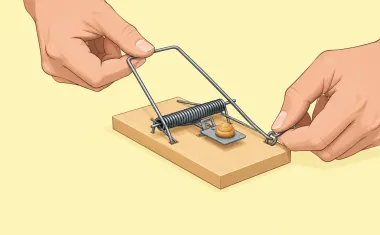
Dab pea-sized peanut butter on the pedal, pull the kill bar back, latch the arm bar and set the trap bait-end against the wall by fresh droppings. Two dozen wooden traps cost about $27.
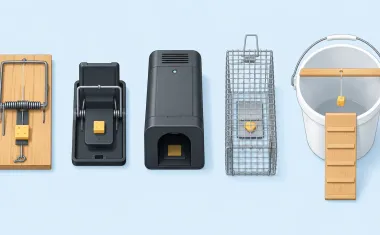
A plain wooden snap trap, about $1 each, is the best mouse trap for most homes. How electronic, live, bucket and glue traps compare, and which to skip.
Vacuum spiders, webs and egg sacs, set sticky traps along the walls, clear clutter and seal the gaps they walk through. Sprays only kill the spider you hit. About $26 in supplies; a pro charges $100–$500.
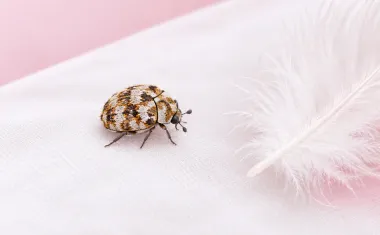
Usually larvae wandering in from lint or wool nearby, not a mattress infestation, and they don’t bite. Hot-wash bedding and vacuum under the bed; traps cost under $8.
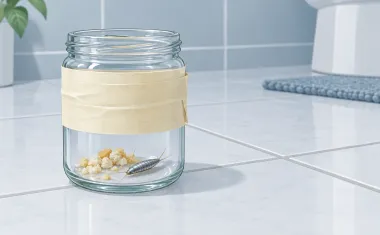
Dry the room below 60% humidity, trap for a few nights to find the hot spots, then dust cracks with boric acid or diatomaceous earth. Supplies run about $47–52; a pro charges $200–$700.
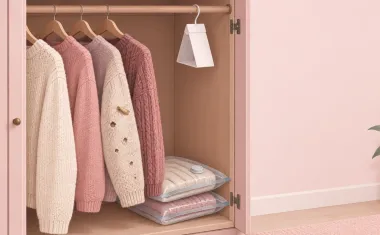
Find the infested wool, wash it hot or freeze it, vacuum the closet and rug edges, store woolens sealed. About $11 in traps confirms it worked; no mothballs.
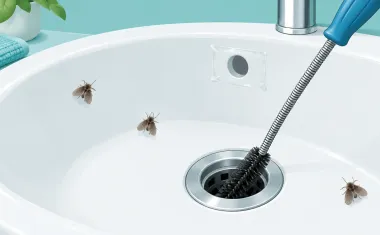
Find the breeding drain with tape overnight, scrub the slime out with a stiff brush, then flush it or use a bacterial drain gel. Bleach won’t do it. Supplies run about $29–46; a pro charges $170–375.
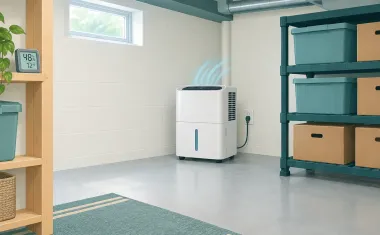
Yes, it helps: silverfish, springtails and house centipedes need damp air. Keep rooms at 30–50% humidity with a $130–150 dehumidifier and a $10 hygrometer, and fix the leak behind it.
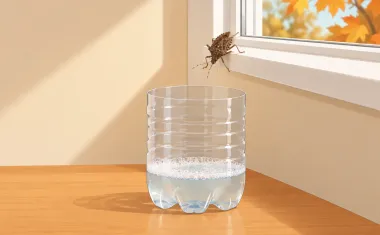
Vacuum them or knock them into soapy water, set a lamp-and-soapy-pan trap at night, and seal outside cracks before late summer. Indoor sprays don’t help. Supplies run about $11–16.
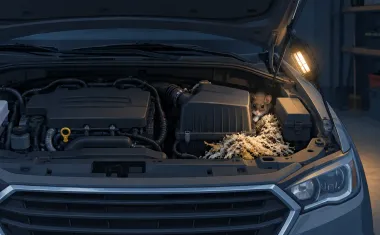
Keep mice out of your car by clearing food and clutter where you park, driving it often and setting snap traps around it ($14–27). Mothballs and ultrasonic gadgets aren’t reliable.