How to Get Rid of Flies in the House (and Why There Are So Many)
Find what they’re breeding in, close the way in, then trap the rest. Sprays aren’t the answer indoors.
To get rid of flies in the house, find and remove what they’re breeding in, close the way in, then catch the stragglers. House flies lay eggs in warm, moist material with food for the maggots (University of Maryland Extension): garbage, pet waste, spoiled produce, and sometimes a dead mouse or bird. Use trash cans with tight lids, fix window screens, and catch the rest with sticky fly tape or a baited fly trap. Skip indoor sprays; University of Maryland says insecticide spraying is generally not effective or recommended inside the home.
Difficulty: easy. Call a pro if the flies keep coming and you can’t find the source, or you suspect a dead animal in a wall, attic or chimney you can’t reach.
First check which fly you have, because small flies at the sink or around plants need a different fix. This guide covers telling them apart, why a lot of flies can appear suddenly, and the steps for house flies. We haven’t run our own trials; it rests on University of Maryland, Colorado State, University of Kentucky and Texas A&M AgriLife guidance.
Dozens of flies appeared overnight? Look for something they’re breeding in: an overflowing trash can, pet waste, a bag of potatoes going bad, or a smell that could be a dead animal in a wall, attic or chimney. University of Maryland says large numbers indoors usually mean they’re breeding in the home or right outside it.
Which Fly Is It?
| Fly | Size | Look | Usually means | Guide |
|---|---|---|---|---|
| House fly | About ¼ in | Gray, 4 dark stripes on the back | Trash, pet waste, a dead animal | This page |
| Blow or bottle fly | Like a house fly | Metallic blue or green | A dead animal nearby (Colorado State) | This page, step 1 |
| Cluster fly | About ⅜ in | Dark gray, golden hairs, slow at windows | Overwintering in walls, fall to spring | Cluster flies |
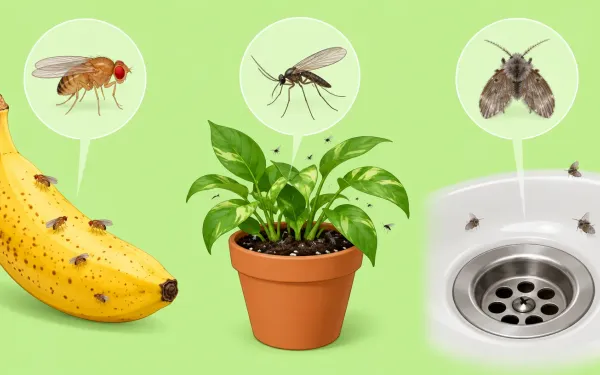
| Fruit fly | About ⅛ in | Tan, usually red eyes | Overripe fruit, drains, recycling | Fruit flies |
| Drain fly | About ⅛ in | Fuzzy, moth-like, wings held like a roof | Slime in a drain | Drain flies |
| Fungus gnat | About ⅛ in | Dark, slender, near houseplants | Wet potting soil | Fungus gnats |
| Phorid fly | About ⅛ in | Humpbacked, runs rather than flies | Hidden decay, sometimes a broken drain line | Phorid fly |
Sizes and looks from the Pest Library entries, which cite University of Maryland, Colorado State and Texas A&M AgriLife. Not sure which small fly it is? How to get rid of gnats sorts them out.
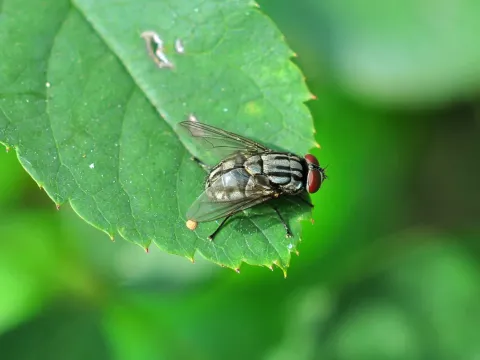 This pageHouse flyAbout ¼ inch, gray, striped back.
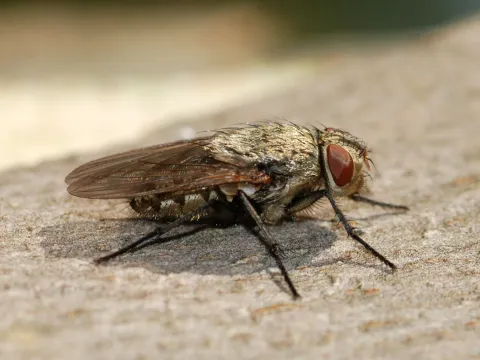 Fall to springCluster flyA bit bigger, golden hairs, sluggish at windows.
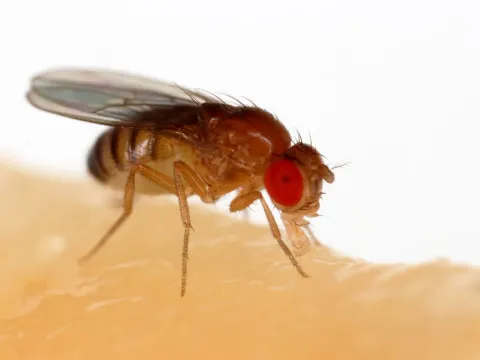 SmallFruit flyAbout ⅛ inch, red eyes, around fruit.
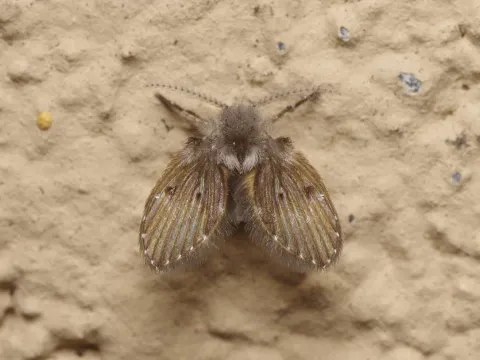 SmallDrain flyFuzzy and moth-like, near drains.
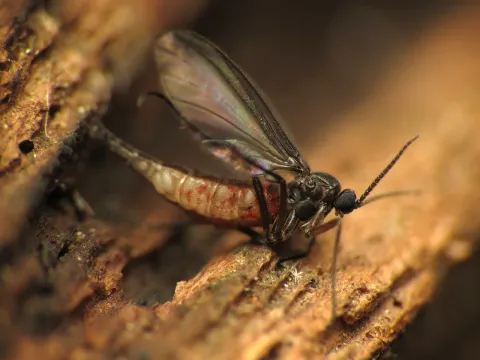 SmallFungus gnatDark and slender, near houseplants.
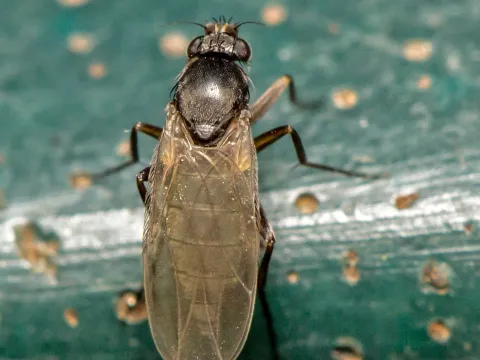 SmallPhorid flyHumpbacked, runs in short bursts.
Why Are There So Many Flies in My House?
A sudden crowd of flies almost always has a source close by. University of Maryland says that when large numbers turn up indoors, they’re usually breeding in the home or the immediate area. Check these, roughly in order:
- Trash: an indoor can without a tight lid, or a garbage bin by the back door. Colorado State says household garbage may need removing as often as every 4 to 5 days in summer to stop flies breeding in it.
- Pet waste: in the yard, a litter box or a dog run. House fly larvae develop in animal waste (Colorado State).
- Spoiled food: produce, compost or spilled pet food (Colorado State).
- A dead animal: a dead mouse or squirrel in the attic or a dead bird in the chimney (University of Maryland). Shiny blue or green flies point this way: blow flies breed on dead animals, and Colorado State says those outbreaks are usually short-lived. Dead mouse smell covers finding one.
- Open screens and doors: University of Maryland says to seal holes, gaps and other entry points.
- Slow flies at sunny windows in fall or spring: probably cluster flies, which overwinter in walls rather than breed indoors.
Flies multiply fast. Many can go from egg to adult in a week or two and produce many generations a year (Colorado State), so one forgotten bag of trash can turn into a lot of flies within a couple of weeks.
How to Get Rid of House Flies
Step 1: Find and remove the breeding spot. This is the step that ends it. Look for anything warm, moist and rotting, from the trash to a pet’s corner of the yard. University of Maryland’s first instruction is to locate and eliminate the places the maggots develop.
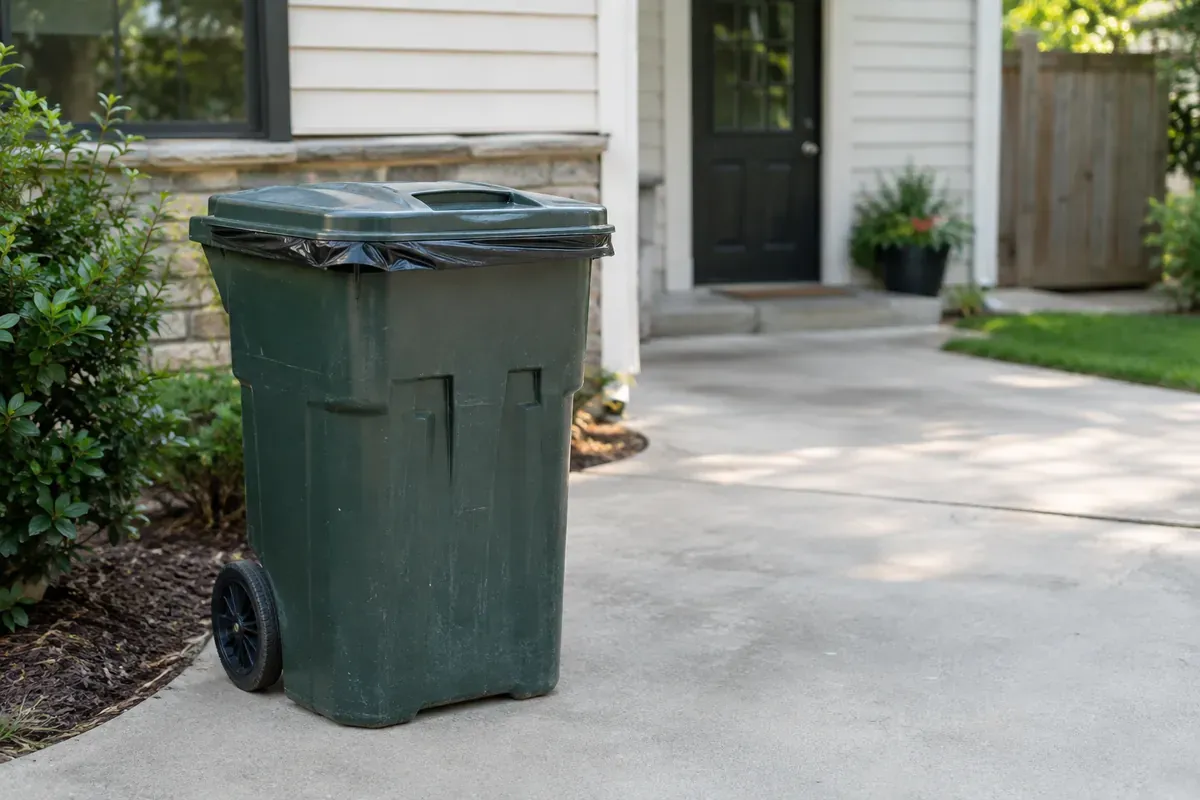
Illustration: a lidded garbage can kept away from the door.
Step 2: Lid and empty the trash. Use cans with tight-fitting lids (University of Maryland) and take garbage out often, every 4 to 5 days in summer (Colorado State). Rinse out the can if it has residue in the bottom.
Step 3: Pick up pet waste in the yard, dog run and litter box regularly, since house fly larvae develop in animal waste (Colorado State).
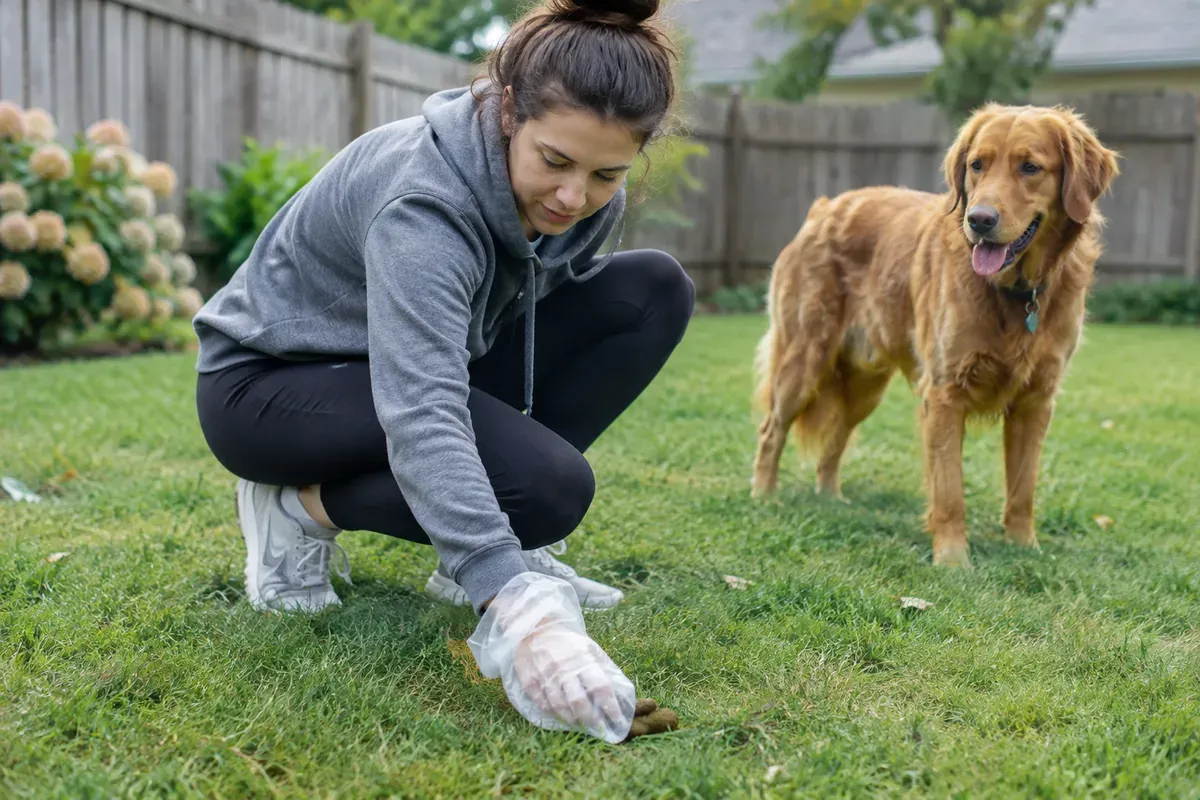
Illustration: picking up pet waste, one of the places house flies breed.
Step 4: Fix the way in. Screen windows (Colorado State) and patch holes in screens, and seal gaps around doors and windows (University of Maryland). For small flies too, the University of Kentucky recommends tight-fitting 16-mesh screens.
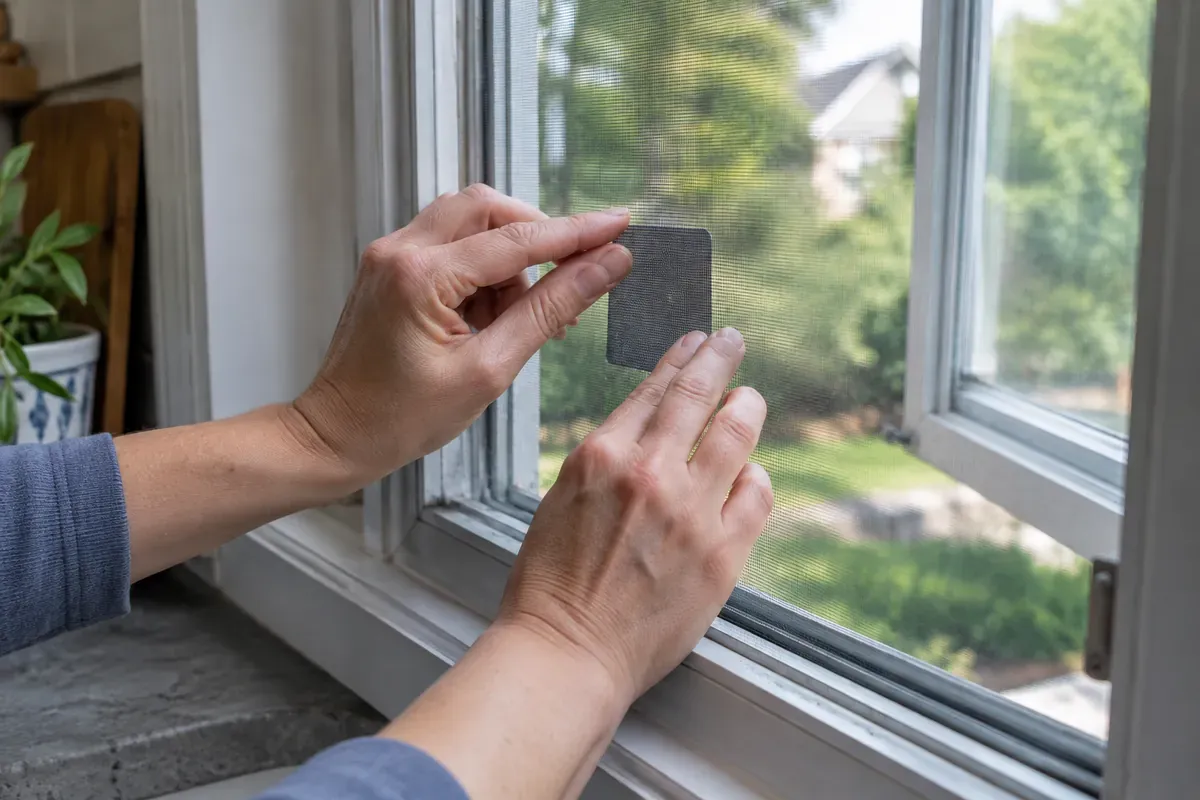
Illustration: patching a hole in a window screen.
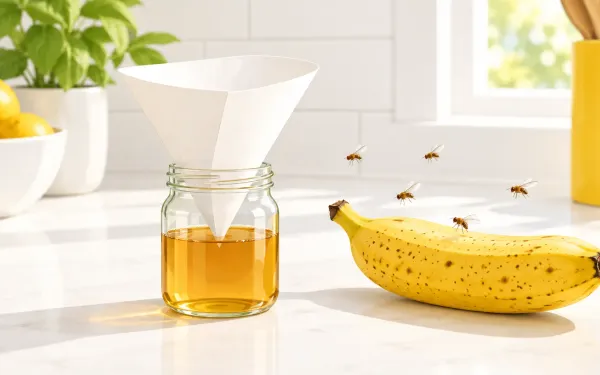
Step 5: Catch the flies already inside. Use baited fly traps or sticky fly tape (University of Maryland), and a fly swatter for the odd one. Colorado State says no trap gives satisfactory control used alone, so traps only work once the breeding spot is gone.
Step 6: Skip the indoor spray. University of Maryland says insecticide spraying is generally not effective or recommended inside the home.
How to Get Rid of Flies in the House Quickly
If you need them gone today: take out the trash and close the lid, clear any rotting food, hang sticky fly tape near the windows where they gather, and swat the rest. That handles the flies you can see. They’ll come back unless you find what they were breeding in, so do steps 1 to 4 the same day.
When to Call a Pro
If the flies keep coming and you can’t find the source, or you suspect a dead animal in a wall, attic or chimney you can’t reach.
Common questions
Something nearby is breeding them: trash, pet waste, spoiled food or a dead animal. University of Maryland says big numbers indoors usually mean they’re breeding in the home or right outside.
They help, but not alone. University of Maryland recommends baited traps or sticky tape for adult flies, and Colorado State says no trap gives satisfactory control used alone. Remove the breeding spot first.
No. University of Maryland says insecticide spraying is generally not effective or recommended inside the home.
Blow flies or bottle flies, about the size of a house fly but metallic blue or green (University of Maryland). Large numbers often come from a dead animal, and Colorado State says those outbreaks are usually short-lived once it’s gone.
The Bottom Line
Flies in the house mean something nearby is feeding their maggots. Find it and remove it, keep trash lidded and emptied, pick up pet waste and fix the screens. Then sticky tape, a trap or a swatter handles what’s left.
Sources and further reading · 4
- University of Maryland Extension: Flies Indoors: house flies, blow flies, breeding sites, dead animals, sealing, lidded trash, traps, no indoor spraying.
- Colorado State University Extension: Flies in the Home: breeding sites, garbage every 4 to 5 days in summer, development in a week or two, traps alone aren’t enough, blow fly outbreaks.
- University of Kentucky: Fruit Flies (EF621): 16-mesh screens.
- Texas A&M AgriLife: Indoor Flies and Their Control (ENTO-050): cited in our Pest Library fly entries.