How to Get Rid of Carpet Beetles: Find the Source First
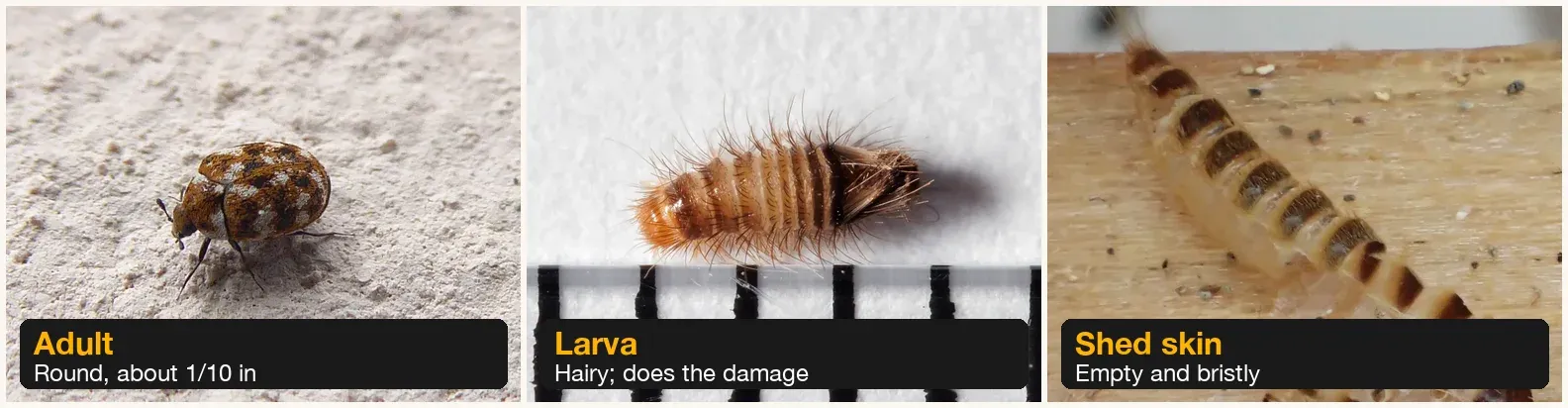
Varied carpet beetle adult and larva, and the shed skin of a related carpet beetle larva. Photos: Syrio, Arnoldius and Magnefl (CC BY-SA 4.0), via Wikimedia Commons.
To get rid of carpet beetles, find where the larvae feed (wool, pet hair, lint or dead insects) and vacuum those spots. Then hot-wash, dry-clean or freeze infested items and store them sealed. Spray only edges and cracks you can’t clean. It’s working when no new larvae or shed skins turn up where you cleaned.
Cost: about $13 in supplies. Difficulty: moderate. Call a pro if larvae are inside a mattress, pillow or upholstered furniture stuffed with hair or feathers, or you can’t find the source after checking closets, carpet edges, vents and the attic.
The round beetles on your windowsill eat pollen, not fabric; the fuzzy larvae do the damage, somewhere dark. Larvae can feed for months, so plan on rechecking for about a year.
Saw a carpet beetle tonight? One adult on a windowsill is no emergency, and they don’t bite. Vacuum it, then check the nearest closet and rug edge for fuzzy larvae or shed skins. Bag any wool with larvae until you can wash or freeze it. Found carpet beetle larvae in bed? Hot-wash the bedding and vacuum under the bed.
What Works and What Doesn’t Against Carpet Beetles
| Method | Works? | Cost | Main limitation |
|---|---|---|---|
| Finding where larvae feed | Yes, the core fix | Free | Nests, vents and attics get missed |
| Vacuuming edges, vents, under furniture | Yes | Free | Won’t reach larvae inside a wool coat |
| Hot wash, hot dryer, dry cleaning | Yes, kills all stages | Laundry or cleaner’s bill | Only for items that can take it |
| Freezing two weeks in a sealed bag | Yes | $5.29 for 10 bags | Let it warm 24 hours before opening |
| Airing woolens in the sun, brushing | Helps, for stored woolens | Free | Once a year; not a cure on its own |
| Spot spray labeled for carpet beetles | Only where you can’t clean | $7.49 | Never on clothing or bedding |
| Bug bombs, cedar, kitchen remedies | No | — | Don’t reach larvae in materials |
Steps 1–3 and 5 use no pesticide; the university guides say cleaning often makes spray unnecessary.
Is It Really Carpet Beetles?
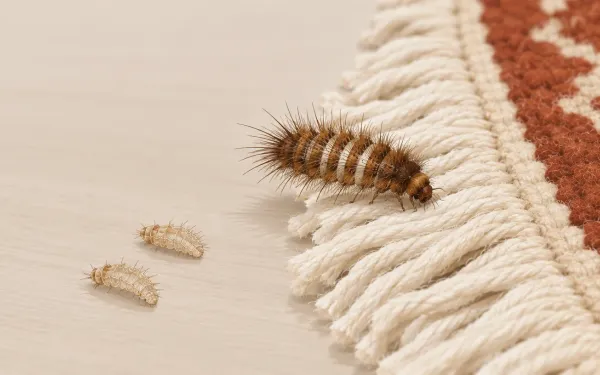
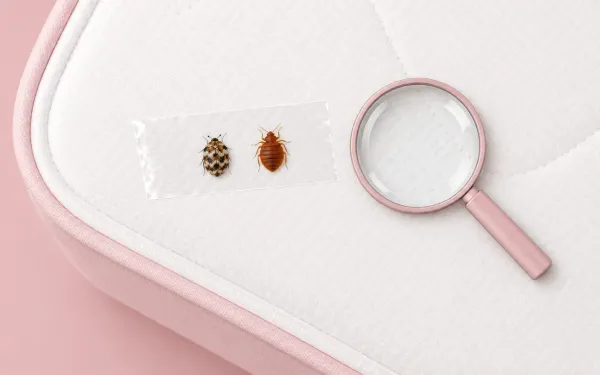
Slow, hairy carpet beetle larvae, bristly shed skins and one chewed patch with no webbing are the main signs of carpet beetles; silk webbing points to clothes moths instead. Carpet beetles don’t bite, though larval hairs can leave itchy, bite-like bumps (Cutis); here’s how to tell carpet beetles from bed bugs.
Step 1: Find Where the Carpet Beetles Are Breeding
The University of Kentucky says you must locate every infested item to eliminate carpet beetles. Larvae like dark, undisturbed places. With a flashlight, check:
- Closets and storage: wool sweaters, scarves, felt hats, furs, down pillows and blankets stored for months, especially seams, folds, cuffs and collars. Cotton and polyester are rarely eaten unless blended with wool or stained.
- Carpet edges and under heavy furniture. Lift wall-to-wall carpet off the tack strip with needle-nose pliers, or, if you rent, vacuum hard along the edge.
- Lint and pet hair under baseboards, in floor vents and ducts, and in upholstered furniture.
- Dead insects in light fixtures, window wells, attics and wall voids.
- Nests: old bird, rodent, bee and wasp nests and spider webs.
- Food: some species infest cereal, pet food and birdseed. Throw out infested packages.
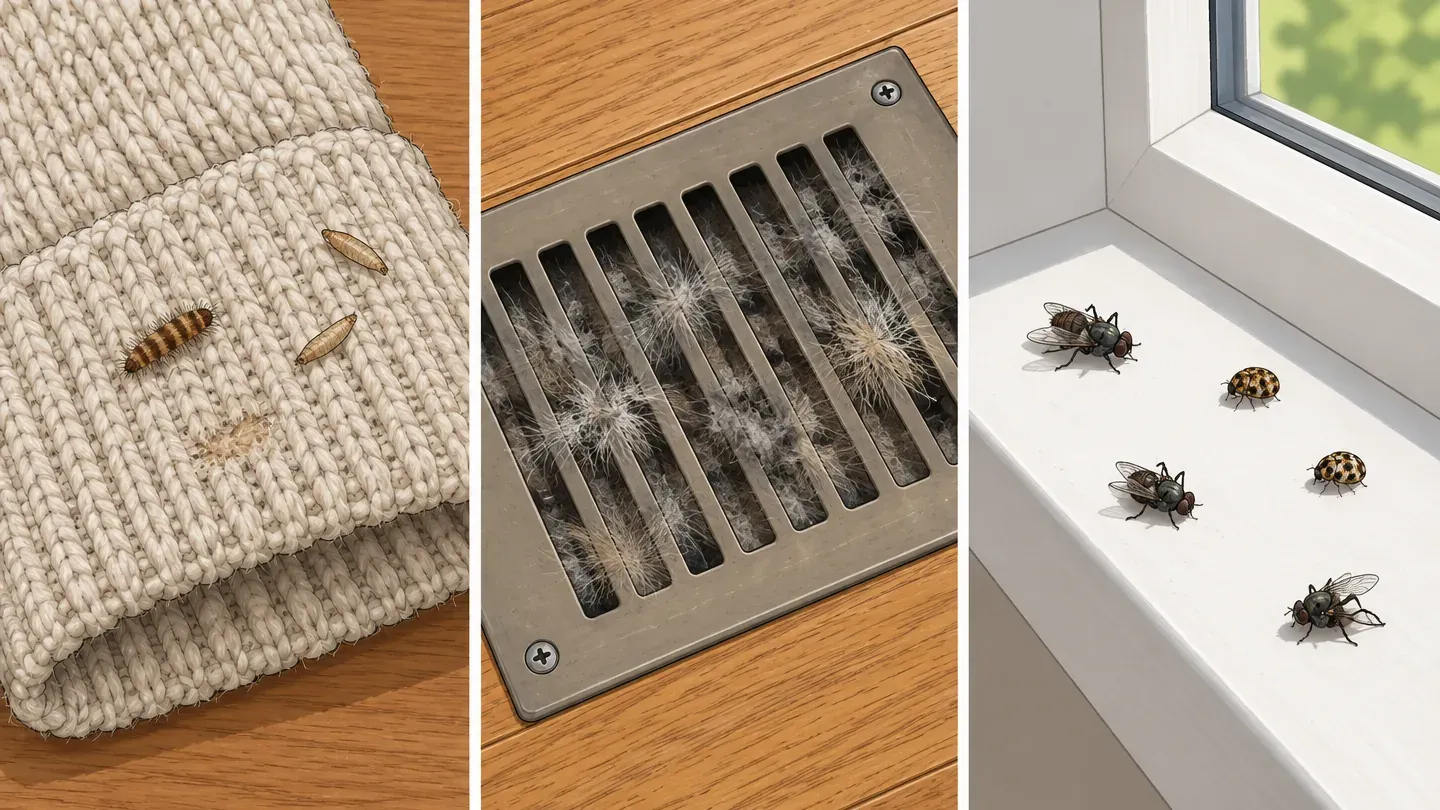
Illustration: a larva on a wool cuff, a lint-clogged vent and beetles on a windowsill.
Step 2: Vacuum Carpet Beetle Larvae and Their Food
Vacuuming removes eggs, larvae and adults, plus the lint and hair they eat. Go along and under carpet edges, baseboards, under furniture, closets, heating vents, draperies and upholstered furniture. Empty the bag or canister outdoors right away; larvae can keep developing in the debris.
Vacuuming alone won’t reach larvae inside a wool coat; that needs Step 3.
Step 3: Wash, Dry-Clean or Freeze Infested Items
UC IPM calls hot-water laundering or dry cleaning the most important method for washable items, because it kills all stages.
- Washable items: wash on hot, then run a hot dryer. Dryer heat alone also works.
- Bedding: hot-wash and dry it and vacuum the mattress seams; more in carpet beetles in bed.
- Wool or anything labeled “no hot water”: freeze it or dry-clean it.
- Badly infested items: bag them and throw them out.
To freeze an item:
- Seal it in a plastic bag to keep frost off.
- Leave it in the freezer for 2 weeks. UC IPM says 2 weeks below 18°F kills carpet beetles; a home freezer set to the FDA’s recommended 0°F is far colder.
- Let the bag warm up about 24 hours before opening, so moisture doesn’t condense on the item. Check first that fragile items can take the cold.
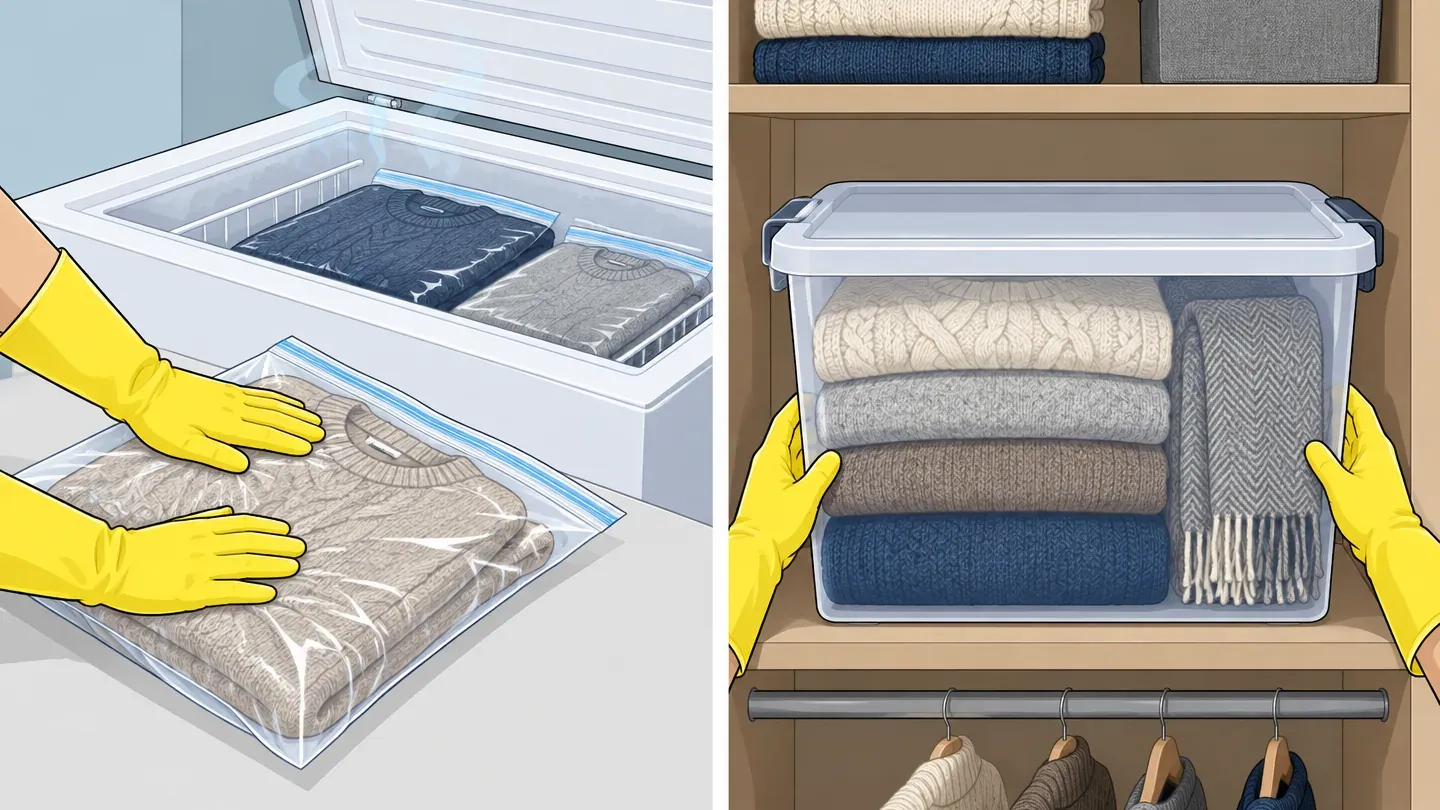
Illustration: sealing a sweater for the freezer, then storing woolens in a latched tote.
Step 4: Use Carpet Beetle Spray Only Where You Can’t Clean
UC IPM says insecticides may not be necessary if food sources are removed and areas kept clean. If larvae still turn up where you can’t clean:
- Use a spray whose label lists carpet beetles or fabric insects, and follow the label.
- Spot-treat only: carpet edges, under rugs and furniture, closet floors and walls, storage shelves, and cracks where lint gathers.
- Never spray clothing or bedding. Keep kids and pets off treated spots until the spray dries, as the label of the spray priced below directs.
- Attics and wall voids: use an insecticidal dust labeled for carpet beetles, and avoid breathing it in. That includes diatomaceous earth, which NPIC says can irritate your nose.
Step 5: Store and Seal to Keep Carpet Beetles Out
- Clean before storing. Food and sweat stains attract carpet beetles.
- Store in airtight containers, such as tight-fitting plastic bags inside totes or trunks. Once a year, UC IPM suggests airing stored woolens in the sun and brushing them thoroughly.
- Mothballs only inside an airtight container, at the label’s dose, away from food, kids and pets. NPIC says vapor leaking from containers that aren’t airtight can cause health problems.
- Keep adults out: fix screens, seal gaps around windows, doors and vents, and check cut flowers before bringing them in. Renting? Ask your landlord in writing.
- Monitor: plain sticky traps on windowsills catch adults flying to the light. Check them once or twice a week through next spring.
Varied vs. Black Carpet Beetles
| Varied carpet beetle | Black carpet beetle | |
|---|---|---|
| Adult | Round, about 1/10 inch, mottled white, brown, yellow | Oval, 1/8 to 3/16 inch, shiny black or dark brown |
| Larva | Carrot-shaped, hairy, light and dark bands, rear tufts | Smooth, golden to dark brown, up to 1/2 inch, long tail tuft |
| Also eats | Dead insects, old nests | Flour, cereal, pet food |
How to Get Rid of Varied Carpet Beetles
The varied carpet beetle is the one most people find. The five steps work; look harder in two places. Windowsills in spring: adults feed on flowers outdoors and fly in, so vacuum them and check for larvae nearby. Dead insects and old nests: clear them from light fixtures, window wells, attics and wall voids, or larvae keep coming back. Eggs hatch in about 2 weeks (UC IPM), so keep vacuuming for a few months.
How to Get Rid of Black Carpet Beetles
The black carpet beetle larva eats flour, cereal and pet food as well as wool, fur and feathers. Use the same steps, then check the pantry: throw out anything infested and seal the rest; how to get rid of drugstore beetles walks through it. Also look under heavy furniture and inside upholstered furniture.
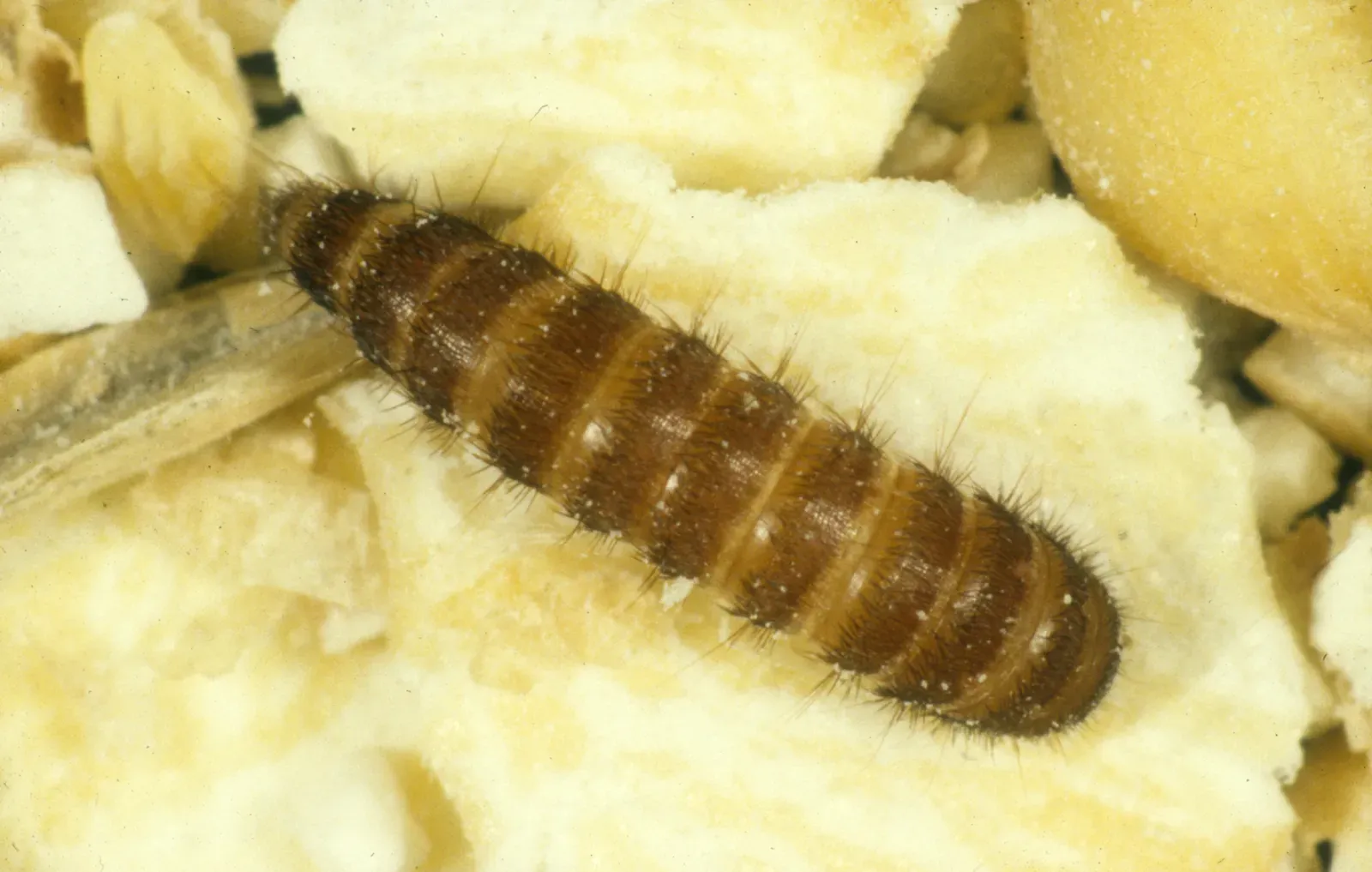
A black carpet beetle larva on grain. Photo: CSIRO (CC BY 3.0), via Wikimedia Commons.
Why Do Carpet Beetles Keep Coming Back?
A few adults each spring are normal: they live on flowers outdoors and fly in through windows. New larvae or shed skins mean something was missed:
- A source: a wool rug in the basement, a nest or dead insects in the attic or walls, pet hair in a vent.
- Larvae that wandered. Colorado State says they can survive several weeks without food and wander far.
- Your car. Lint, pet hair and dead insects under the seats feed larvae too; vacuum seats, mats and trunk.
- Cleaned items went back unsealed into an open closet.
Sprays are often of limited use because larvae sit inside materials (University of Kentucky). Bug bombs won’t be effective (Colorado State), and cedar chests seldom seal tightly enough (Kentucky). Widen the Step 1 search instead.
What It Might Still Cost
| Item | Typical cost |
|---|---|
| Two-gallon freezer bags, 10 (Ziploc) | $5.29 |
| Indoor insect spray labeled for carpet beetles, 24 oz (Ortho Home Defense) | $7.49 |
| DIY total | About $13 |
| Pro, small infestation in one area such as a closet | $150–$175 |
| Pro treatment, typical (price guide) | $250 (range $150–$450) |
| Pro, severe infestation in a larger home | $2,000–$4,000 |
DIY: Target list prices, October 1, 2026, before tax; assumes you own a vacuum, washer and freezer. Carpet beetles are on the spray’s label.
Price-guide figures: HomeAdvisor (June 2026). Too few homeowners shared carpet beetle quotes for a reliable typical price.
Before you pay for a whole-house carpet beetle treatment: HomeAdvisor’s guide says your whole home needs treating, but the university guides say cleaning often makes spray unnecessary.
When to Call a Pro: How Pros Exterminate Carpet Beetles
- Stuffed furniture, mattresses or pillows filled with hair or feathers are infested. UC IPM says spraying the outside won’t work; a licensed firm can fumigate the item in a vault.
- A valuable rug that a spray might damage.
- You can’t find the source, or larvae keep coming back.
Ask where they found the source and whether follow-up visits are included; see what an exterminator does.
Common questions
Usually not. Call one for infested stuffed furniture, which needs fumigation, or when you can’t find the source.
Find every infested item, vacuum, then hot-wash, dry-clean or freeze what you can. Spray only edges and cracks you can’t clean (UC IPM).
Most of a year. Eggs hatch in about 2 weeks and larvae can feed for 70 to 630 days (UC IPM). No new larvae or shed skins by next spring means you’re likely done.
The Bottom Line
Carpet beetles are beaten by cleaning, not spraying. Find where the larvae feed, vacuum, hot-wash, dry-clean or freeze what they touched, and store woolens sealed. A few adults each spring are normal; new larvae or shed skins mean a missed source. More photos and guides: what carpet beetles look like.
Sources and further reading · 8
- UC IPM: Carpet Beetles (Pest Notes 7436)
- University of Kentucky: Carpet Beetles (ENTFACT-601)
- Colorado State University Extension: Dermestid Beetles (Carpet Beetles)
- University of Maryland Extension: Carpet Beetles
- Cutis: What’s Eating You? Carpet Beetles (Dermestidae)
- NPIC: Mothballs: Regulation and Proper Uses and Diatomaceous Earth
- FDA: Are You Storing Food Safely?
- Cost guide: HomeAdvisor: Carpet Beetle Extermination Cost